

Last updated: September 2026
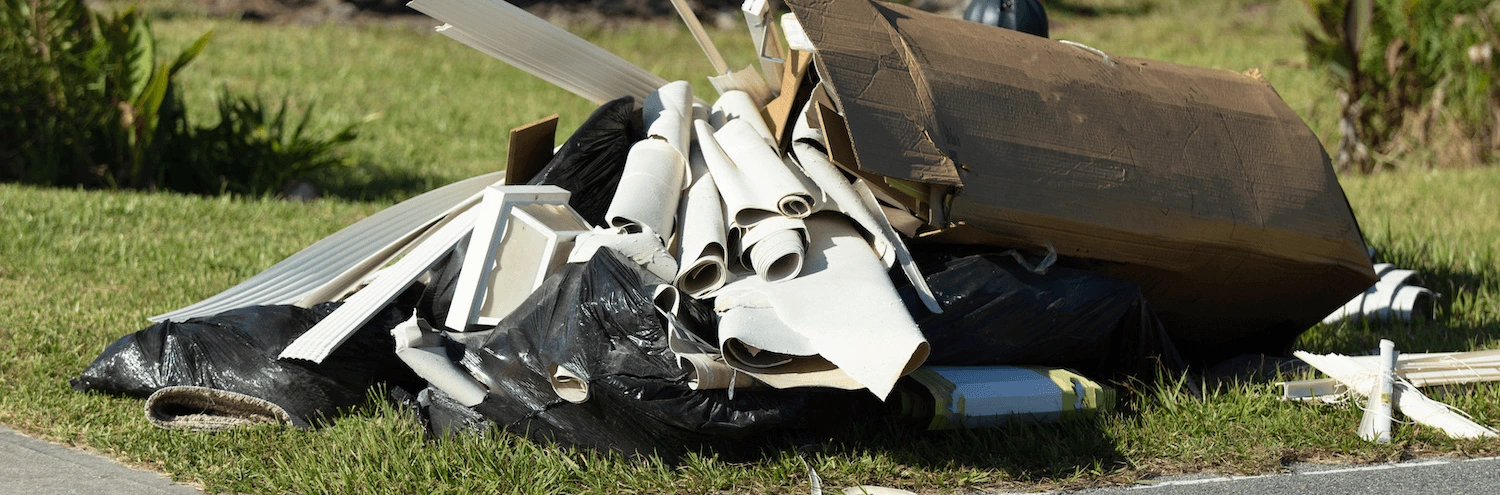
Australian councils collected 510,000 tonnes of hard waste, mostly furniture, in 2022-23 across six states and territories, and in NSW, bulky waste pickups made up 6% of all kerbside collections in 2024-25. Furniture is rarely the biggest weight problem on a council's books. It is the biggest volume problem, which is why clean-ups are capped in cubic metres, not kilograms.
Furniture Waste, By the Numbers
Local governments across the ACT, NSW, Queensland, South Australia, Victoria and Western Australia collected a combined 510,000 tonnes of hard waste in 2022-23, the category the national waste reporting framework uses for furniture, bikes and similar bulky items collected outside the standard bin system. That is on top of the 9.9 million tonnes those same councils collected through kerbside garbage, recycling and organics bins that year.
In NSW specifically, the 2024-25 Local Government Waste Data Survey found that bulky waste pickups make up 6% of everything councils collect at the kerb, the smallest of the five main kerbside collection types. Not every council runs one: of the 128 NSW councils surveyed, 75 offered some form of bulky kerbside pickup, 110 offered drop-off at a waste facility instead, and 27 offered free disposal vouchers rather than a truck.
Why Furniture Waste Is a Volume Problem, Not a Weight Problem
A three-seater sofa weighs perhaps 40 kilograms but takes up close to a cubic metre of truck and landfill space. A mattress is lighter again but is almost impossible to compact. That mismatch between weight and volume is why councils that run a kerbside bulky waste service cap it by size rather than weight.
Inner West Council limits its bulky household items and furniture category to two cubic metres, about the size of a standard box trailer, per collection. Penrith City Council runs the same two-cubic-metre allowance, giving residents four free collections a year. Go over the limit at either council and the excess is left behind; you rebook and pay for another allocation.
The volume cap also decides where furniture actually ends up. At Inner West, items booked under the bulky household items and furniture category go to landfill. Mattresses are the one exception: booked as their own category, they're sent to a dedicated mattress recycler instead of the general waste stream.
Mattresses: the Hardest Case
Mattresses are the extreme version of the volume problem, and the hardest item on this list to recycle well. The Australian Bedding Stewardship Council estimates 1.8 million mattresses are disposed of in Australia each year, enough that laid end to end they would stretch from Darwin to the tip of Tasmania. Mattresses have appeared on the Federal Minister's Product Stewardship Priority List in successive years because of the scale of the problem.
Roughly 60% of those 1.8 million mattresses are collected by a recycling function rather than going straight to landfill, but recycling a mattress doesn't mean the whole thing comes back. Current processes recover somewhere between 44% and 64% of the materials, mostly steel and polyurethane foam; the rest still ends up in landfill or waste-to-energy. A separate 2024 industry survey put a number on the gap: of the 1.8 million mattresses discarded annually, about 740,000 go straight to landfill, equivalent to roughly 22,000 tonnes, and even the ones that are recycled lose an estimated further 15,000 tonnes of material a year to components the local market can't yet process, chiefly pocket springs and memory foam.
Can Furniture Actually Be Recycled?
Most furniture can't go in a kerbside recycling bin at all, and putting it there does more harm than good. Recycling guidance from Planet Ark's Recycling Near You service is blunt about this: unless a piece is made of pure metal, pure plastic or pure untreated timber, it won't be recyclable through a standard facility, and treated or composite timber (the material behind most flatpack and chipboard furniture) falls outside that. Putting furniture in a household recycling bin risks contaminating an entire load of genuinely recyclable material.
That leaves resale, donation and manufacturer take-back schemes as the main way to keep usable furniture out of landfill. IKEA's Buy Back program is one concrete example: eligible furniture in resaleable condition earns a refund card worth up to 50% of its original price, and the piece is then resold in-store, sold online, or donated.
Donating Furniture: What Actually Gets Accepted
Donating isn't a guaranteed diversion from landfill either. Charitable Reuse Australia, the peak body for the charity retail and reuse sector, is explicit that furniture, electrical items and white goods shouldn't just turn up at a shop: donors are asked to call ahead and check the store has the room and equipment to handle the item first. Donations, including furniture, can still be refused on the day over condition, saleability, available space, or the lifting and transport equipment needed to move a heavy item safely.
The sector overall is a genuine diversion channel. Across all donated goods, Australians give more than a million tonnes a year to charity and social enterprise shops, generating an estimated $961 million annually toward their charitable programs. But not every roadside donation bin is part of that legitimate system: Charitable Reuse Australia estimates fewer than 65% of the roughly 10,000 donation bins around the country are run by an actual charity, which is worth checking before a large item goes anywhere near one.
The Bottom Line
Furniture waste isn't primarily a tonnage story. It's a truck-space and landfill-cell story, which is why every lever that actually moves it, council volume caps, mattress-specific recycling streams, charity pre-screening, is measured in cubic metres and item condition rather than kilograms.
If a council clean-up booking won't cover what you need to move, or the wait doesn't suit your timeline, a same-day furniture removal service is the other route. See furniture removal for how that works.