The fastest way to get rid of sentimental clutter is to separate the memory from the object: photograph or digitise the item, keep only the one or two pieces from any collection that still mean something, and let the rest go by donating it, passing it to family, or having it removed. Last updated: September 2026.
Why sentimental items are harder to let go of than anything else
It's not a character flaw. Two well-documented effects in behavioural psychology explain why a box of old birthday cards is harder to throw out than an old phone charger, even when neither one has been opened in years.
The first is loss aversion. Psychologists Daniel Kahneman and Amos Tversky showed in 1979 that people feel the pain of losing something more strongly than the pleasure of gaining something equivalent. Giving an item away registers, emotionally, as a loss, even when the item itself is doing nothing but taking up a shelf.
The second is the endowment effect. In a well-known 1990 study, Kahneman, together with economists Jack Knetsch and Richard Thaler, gave university students a coffee mug and then ran a market for them. Students who'd been handed a mug demanded roughly double what other students were willing to pay for an identical one. Simply owning something inflates how much we think it's worth, which is why a jumper you'd never buy new in a shop can feel impossible to hand over once it's already yours.
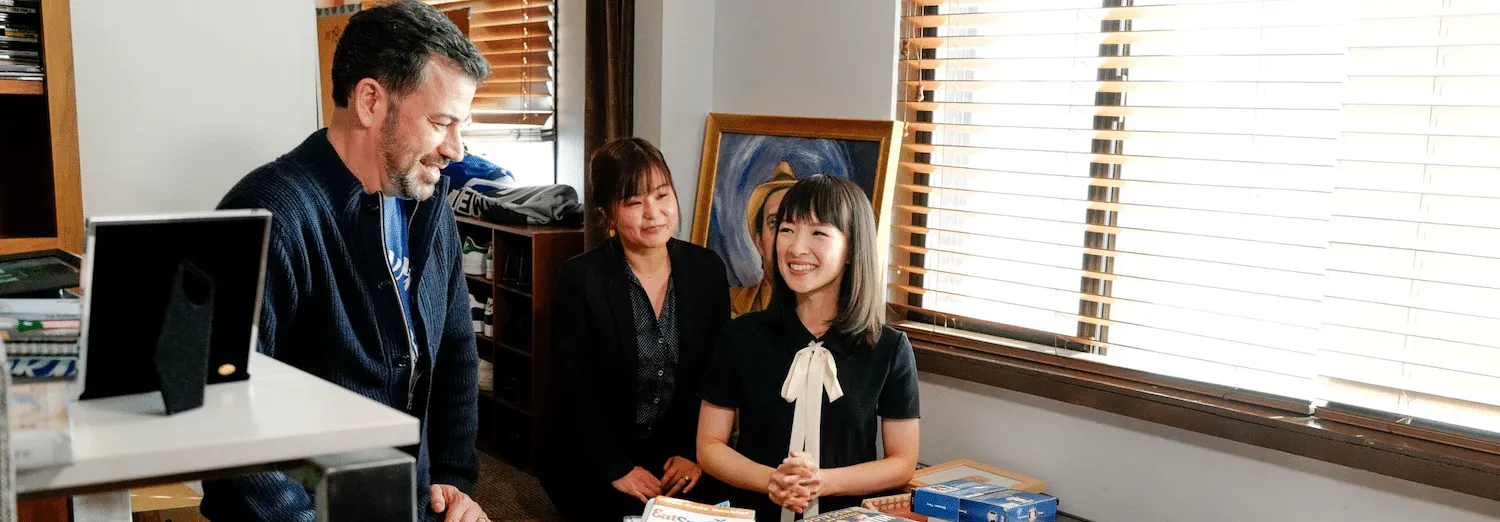
Neither effect is really about the object itself. It's about ownership and the discomfort of loss, which is why asking "do I need this" rarely settles the question on its own, no matter how logical the answer is. The item has to lose its grip on you emotionally before it can actually leave the house, and that usually takes more than a single decluttering session to work through. A well-known alternative approach is covered in these decluttering lessons from Marie Kondo.
What counts as sentimental clutter, and why the approach differs
"Sentimental clutter" covers a few genuinely different categories, and the best way to deal with each one isn't quite the same.
Paper and photos, such as school reports, greeting cards, ticket stubs and old letters, are usually the easiest category to work through once you separate them from everything else, because they photograph or scan well and take up almost no room once digitised.
Clothing and textiles, like a parent's jumper or a childhood outfit, carry meaning through touch and smell as much as appearance, which is part of why they're often harder to part with than a photo of the same era. Keeping one or two genuine pieces, rather than a whole wardrobe's worth, usually keeps that sense of connection intact.
Furniture and heirlooms come with a second, more literal problem on top of the emotional one: size and weight. That gets its own section further down, since the practical side of moving a wardrobe or a dining table is different from sorting a drawer of photos.
Digital sentimental clutter, such as old voicemails, text threads and emails from someone you've lost touch with or lost altogether, doesn't take up physical space, but it can be just as hard to delete. There's rarely a pressing reason to force that decision the way there is with a house full of boxes, so it's reasonable to simply leave it be until you feel ready, backed up somewhere safe in the meantime.
It's common to hold onto a loved one's things, too
If the clutter you're working through belonged to someone who died, holding onto their belongings isn't unusual, and it isn't a sign anything is wrong. A 2026 study published in BMC Psychology found that 83.2% of bereaved adults kept at least one object connected to the person they'd lost. The researchers describe these items as acting like "emotional bridges," helping someone stay connected to the person they've lost while they adjust to the loss.
The same study also found that people who kept these objects reported more severe grief symptoms than those who didn't, so it isn't a simple case of "keeping things is healthy." That doesn't mean keeping a parent's watch or a partner's jumper is doing you harm; it likely means grief and object-keeping tend to travel together, not that one causes the other. Keeping something that connects you to a person you've lost is a normal, common response, not a problem to solve.
Where it can help to draw a line is between belongings that genuinely comfort you and belongings you've simply not made a decision about yet, because a property still needs to be cleared. Those are two different tasks, and it's reasonable to keep the first while getting practical help with the second. If it starts to feel like the grief itself isn't easing over time, that's worth talking through with your GP or a grief counsellor, rather than something to work through alone or treat as a decluttering problem.
When it's more than sentimentality
Keeping meaningful items is normal. It becomes a different, more serious problem when the volume of possessions starts blocking a home's exits, walkways or rooms, a pattern clinicians classify separately from ordinary sentimentality as hoarding disorder.
A 2009 study of Melbourne's Metropolitan Fire District, commissioned by the Metropolitan Fire Brigade, is one of the few pieces of research that puts numbers to the risk. It found that hoarding households made up only 0.25% of residential fires but accounted for 24% of preventable fire deaths over the same period. Fires in hoarded homes were also far harder to contain: only 40% stayed confined to the room where they started, against roughly 90% for an average residential fire. The average damage bill in a hoarding fire came to around $100,100, against $12,600 for a typical residential fire in the same district.
Those figures describe a clinical level of hoarding, not a wardrobe full of keepsakes, and they're specific to one Australian fire district rather than the country as a whole. But if letting go of things feels genuinely impossible rather than just uncomfortable, or if belongings are blocking a doorway or a hallway, that's a conversation worth having with a GP rather than something to push through alone.
Deciding what's actually worth keeping
Not every sentimental item earns its place, and a few honest questions usually do more than any organising method or app.
Is it costing you money to keep? A paid storage unit, or a spare room given over entirely to boxes, is a real, ongoing cost for something you may not have looked at in years. If you can't remember the last time you opened the box, the storage fee is the only thing actually keeping the memory "alive."
Is it keeping you somewhere you've already left? An item tied to a relationship, a job or a period of your life that's genuinely over can hold you there rather than simply mark that it happened. There's a difference between an object that represents a chapter you've closed and one that's quietly keeping the chapter open.
Is it a source of conflict? Where keeping something causes real friction with the people you live with, it's worth deciding honestly what actually matters enough to keep arguing about, and what's just been sitting in the middle of an old disagreement.
Would you buy it again today? This isn't about the price; it's a quick way of testing whether an item still fits who you are now, or whether it belongs to a version of you that's moved on. An item you'd still choose, given the option, is usually one worth keeping. One you'd walk past without a second look is a reasonable candidate to let go of.
None of this means clearing everything out. It means being honest with yourself about which items are doing something for you, and which are simply taking up space because getting rid of them feels harder than keeping them.
Keeping the memory without keeping the object
The object and the memory aren't the same thing, and separating them is usually what makes letting go possible.
Photograph it. A clear photo of a piece before it goes preserves what it looked like and where it came from, without the shelf space.
Repurpose it. A parent's old shirts can become a small quilt; a favourite pair of jeans that no longer fits can be cut down and kept as shorts. The material stays connected to you; the pile in the wardrobe doesn't.
Pass it on. A family heirloom that someone else actually wants gets more use being used than being stored in a box. Ask before assuming no one wants it. A piece with no obvious interest to your immediate family might matter to a cousin, or, if it has genuine historical value, to a local museum or archive.
Keep one of the set. If you've got a shelf of near-identical stuffed toys or a drawer of old T-shirts from the same era of your life, one representative piece usually carries the same memory as the whole collection did.
Build a scrapbook. Letters, ticket stubs and photos take up far less room glued into a single book than scattered through drawers around the house, and a scrapbook is something you'll actually look through again, unlike a box in the garage.
Give yourself permission to say goodbye deliberately. Marie Kondo, author of the 2014 bestseller "The Life-Changing Magic of Tidying Up," built her method around a single question: does this still bring you something positive. Spending a moment acknowledging what an item meant to you, rather than just binning it, is often what makes the decision feel less like a loss and more like a choice.
Signs you're ready to let something go
There's no test that settles this for you, but a few honest signals are worth checking against.
You wouldn't grab it first in an emergency. If a genuine safety scenario, like having to leave the house quickly, wouldn't have you reaching for it, it's probably not as essential as it feels on an ordinary day.
You're keeping it out of guilt, not attachment. An item that makes you feel worse the longer you keep it is doing the opposite of what a keepsake is supposed to do.
You're keeping it for someone else who hasn't actually asked for it. If it's a family member's item you're storing "just in case," offer it to them directly rather than holding onto it indefinitely on their behalf.
You haven't looked at it in years and don't display it. If it's been in a sealed box since the day it arrived, it may have already stopped being a keepsake and started being storage.
You only remembered it existed once you saw it while sorting. A genuine keepsake tends to come to mind on its own, at odd moments, whether or not it's in front of you. An item you'd completely forgotten about until it turned up in a box is often carrying less weight than it feels like it should, given how long you've kept it.
When the sentimental item is furniture-sized
Not every sentimental item fits in a shoebox. A parent's dining table, a grandmother's wardrobe or an old piano can carry just as much meaning as a photo album, and they come with a second, more literal problem: they're heavy, awkward to move, and often too large for a normal council collection.
The emotional side works the same way as with smaller items: photograph it before it goes, ask family whether anyone genuinely wants it before assuming no one does, and give yourself permission to keep the memory without keeping a piece of furniture taking up a room you actually need. If a specific joint, drawer or detail is what you actually love about the piece, a close-up photo of that detail is sometimes enough on its own.
The practical side is different, though. Measure doorways and stairwells before you commit to moving anything large, since a piece that came in through a since-renovated doorway may not go back out the same way it came in. Heavy or bulky pieces are also where it's worth getting help rather than attempting it solo. Whether that's a family member with a trailer or a professional removalist depends on the size of the job, but a piece that two people can't safely lift is not a piece to wrestle down a staircase alone. Deciding this early, before the move date rather than on the day itself, generally makes the whole process considerably less stressful for everyone involved.
A simple process for clearing sentimental clutter
- Start small. A single drawer or box is a realistic place to begin. Save the room full of childhood boxes for once you've built some momentum on smaller decisions.
- Separate the object from the memory before you decide. Take the photo, write the note, or have the conversation about who else might want it first, so the decision about the physical item isn't also a decision about whether to keep the memory itself.
- Use an item one last time before it goes, if that feels meaningful: wear the jumper, use the teacup, look through the whole photo album in one sitting. It can make the goodbye feel deliberate rather than abrupt.
- Sort into keep, give away, and undecided, rather than just keep and discard. An undecided box you come back to in a month is a legitimate outcome, not a failure to make a decision.
- Ask for help if you want it. Sorting alone is harder than sorting with someone else in the room, even when they're not doing any of the physical work.
None of this has to happen in one sitting, and it doesn't need to end with an empty house. The point isn't to own as little as possible; it's to be left with the things that are actually still doing something for you, rather than a house full of boxes you're keeping out of habit or guilt. Ten items you genuinely love are worth more than a hundred you're just storing.
If you'd rather not manage the removal side yourself once the sorting is done, a rubbish removal company can take the haulage and disposal off your hands, particularly once the pile is more furniture and boxes than anything a car boot or a council bin day can handle.
If the sentimental clutter you're working through belongs to someone who's passed away, our guide to deceased estate rubbish removal and cleanup covers what that process looks like end to end, from sorting through to the final clearance.