A school waste disposal policy needs to cover three things: how waste is segregated on site, who's responsible for keeping records, and what NSW rules apply. That last one changed recently: schools that sell or prepare food are now being phased into the state's food waste recycling mandate, starting from 1 July 2026. Here's what a proper policy covers, and what's now required by law.
Last updated: August 2026.
Waste Disposal Policies for a Cleaner School
Segregate Waste
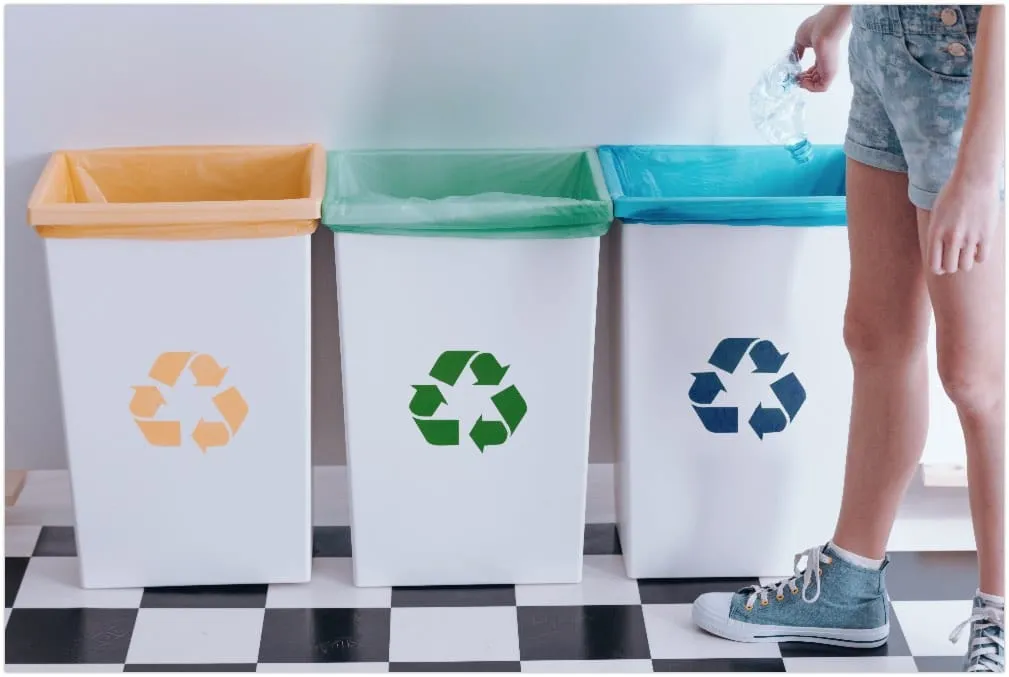
NSW Department of Education guidance splits school waste into five streams: general waste (non-recyclable), paper recycling, co-mingled recycling (containers, drink bottles, cans), e-waste (toners, computers, batteries), and organic waste (compostable). A policy that only says "sort your rubbish" doesn't tell staff or students which of those five bins something belongs in: label bins against this exact list, not a generic recycling/general split.
The Department also recommends running a school waste audit before setting policy: sorting a representative sample of bins, such as classroom and playground bins for one grade directly after lunch, to identify the main sources of waste. The audit template is in the Department's Waste Handbook.
The Department's method runs in ten steps: label buckets or tubs for office paper, compostable organic waste, recyclable paper and cardboard, recyclable containers and mixed waste; lay a tarpaulin out with the containers at its corners; assign recorders to track weights and tally tub counts per category; fit students with gloves and tongs; tip the selected bins onto the tarpaulin; sort the contents into the waste stream categories; weigh and record each tub; tally tub numbers to calculate volumes; work out the percentage each category makes up by weight and volume; then analyse the results and propose strategies for cutting waste.
Assign Responsibility
A policy only works if someone owns each part of it. The NSW EPA's guide to setting up school food waste systems recommends building a dedicated waste management team rather than leaving it to one person: feedback from schools shows the most successful programmes are the ones run by a team working together. Worth naming in the policy itself:
- Principal or leadership team: sets the vision, allocates resources and develops the policy.
- Finance staff: oversee the waste contract and monitor invoices for cost and volume.
- Teachers and support staff: build waste into lessons and help run the audits.
- Facilities, grounds and cleaning staff: manage bin separation and cleanliness.
- Canteen and catering staff: cut food waste at the source and set up efficient service practices.
- Student representatives: drive action and lead by example.
Start with a small team and grow it over time.
No Littering
Litter that isn't binned properly can't be segregated, and it leaves school grounds looking untidy. A written anti-littering policy, with clear consequences, is worth pairing with the bin-labelling changes above rather than leaving as a stand-alone rule.
The NSW Food Waste Mandate: What Schools Need to Know
If your school sells or prepares food, you're being brought into the NSW Government's food organics and garden organics (FOGO) recycling mandate. The rollout is staged by how much general waste your school produces each week:
- 1 July 2026: source separation required once weekly general waste bin capacity reaches 3,960 litres
- 1 July 2028: the threshold drops to 1,980 litres
- 1 July 2030: the threshold drops again to 660 litres
As the threshold keeps dropping, a school that's exempt today may still be brought into the mandate at the 2028 or 2030 date. The EPA offers rebates of up to $50,000 for onsite equipment like bins and storage to help schools prepare, and its Bin Trim app can help you find that support plus food waste collection services operating in your area. Councils are a second funding avenue: many run their own annual grant programmes for local environmental or sustainability projects. It's worth starting early: around 30% of the average school bin is made up of food scraps, so separating it cuts general waste volume and can reduce the school's waste costs.
Canteen and Lunchbox Waste
Food waste in a school doesn't only come from the canteen: the common sources are student lunch leftovers, the canteen or cafe itself, catering and cooking classes, and staff rooms. The Department's audit method extends to packaging too: auditing lunch boxes and food packaging in the canteen helps assess the impact of packaging on the school's waste stream, and can support a shift to "nude food" and other waste-free lunch strategies.
On the canteen side, a food waste review can flag where the waste is actually coming from, whether that's over-ordering, stock rotation or portion sizes. On the lunchbox side, the Love Your Lunch Schools Program, documented in the EPA's food waste guide and run across 24 schools by the North East Waste Forum between 2019 and 2022, found that waste audits at eight of those schools, covering 1,171 students in Term 2 2021, recorded an average 46% reduction in edible lunchbox food waste, with one school reaching 93%.
Reuse and Recycle Waste
NSW schools can also fundraise from their co-mingled recycling stream through Return and Earn: some depots offer bins and regular pick-up services for schools that want to set up drink-container recycling onsite. It's not a token programme: Dapto High School's "Green Group" has collected around 300,000 containers through Return and Earn.
Composting
On-site composting is one option for managing the organic waste stream (see the five-stream breakdown above): small and large-scale systems both work, as an alternative to arranging an offsite food waste collection service. It also feeds straight back into a school garden if there is one.
On-site options go beyond compost bins: worm farms and, at some schools, chickens can also process food scraps, alongside large-scale composting systems. They need more intensive management to work well, but build practical skills in organic waste management along the way. Arranging an off-site collection is the alternative: a commercial processor can take all food types, including meat, and handle large volumes of food waste, though it costs more and may not be available in your area.
If you go down the off-site route, a few contract terms are worth checking before signing: whether weight-based invoicing is available, which can cut costs once heavy food waste is out of the general waste bin; whether monthly reports on bins collected and waste diverted from landfill are included; and the notice period for changing the contract, since some providers require at least 90 days' written notice before it expires.
Reinforcing Waste Disposal Policies in Schools
Students tend to obey rules if they are consistently imposed. That's why waste disposal policies must be coupled with constant reminders and rigid enforcement so that students can hardly neglect them. To help you strengthen your school rules and regulations, here are a few tips that might help.
Provide orientation seminars on proper waste disposal
Orientation seminars are a chance to explain the policy in person, not just post it on a noticeboard, and to walk through why source separation matters now that the FOGO mandate applies to any school selling or preparing food. It's also a teaching opportunity, so students learn the negative impacts of improper waste disposal on humans, animals, and the environment.
Place visible signages
Signages serve as reminders for your students about the enacted policies on waste disposal. Place these signages on areas that are clearly visible to students such as beside the trash bins and along the hallways.
Impose penalties
People are more likely to obey rules if there are consequences for defying them. Negative reinforcement could help strengthen the policies imposed within the school. Consequences can scale with the offence: picking up trash and dried leaves on the field for a first or second breach, moving up to community service for repeat offences.
Set an example for students
As the more experienced individuals in the school community, teachers and staff should serve as role models for students to emulate. They should practise proper segregation, recycling, and composting even at home so that they bring that habit even in school. That way, setting an example for students is more genuine and natural.
Common questions about school waste policy
Does my school have to separate food waste? If your school sells or prepares food, yes: the NSW Government's FOGO mandate applies to schools in that category, phased in by weekly general waste volume. Schools whose weekly general waste bin capacity reaches 3,960 litres were required to start separating food waste from 1 July 2026.
What are the five waste streams NSW schools need to manage? General waste, paper recycling, co-mingled recycling (containers, bottles, cans), e-waste, and organic waste.
How do we find out where our school's waste is actually going? Run a waste audit: sort a representative sample of bins into the categories above to identify the main sources of waste before setting policy.
Can our school raise money from recycling? Yes, through Return and Earn: some depots offer onsite container-collection services for schools. Dapto High School's Green Group has collected roughly 300,000 containers this way.
Getting a policy right on paper is one thing; clearing what the policy generates is another. Once your school has waste properly segregated, general rubbish, old furniture, and bulk classroom or office clean-outs still need somewhere to go.
Paul's Rubbish Removal handles hard rubbish removal for schools across Sydney: hard rubbish removal. Jobs can be booked for any time, so a clear-out doesn't have to happen while students are on site, and collected material goes to council processing facilities that recycle. Ring 0407 125 125 for a free quote.