Greater Sydney's landfills are on track to reach capacity by 2030. The NSW EPA confirmed in June 2025 that landfills serving Sydney's households and businesses will face a shortfall of 1.1 million tonnes per year from that date, pushing waste into regional areas or interstate at significant cost. Household waste management costs are projected to rise by 20% on average as a result.
Last updated: July 2026
This guide covers how Sydney's landfills work, where they stand right now, and what the 2030 deadline means for households across the city.
Sydney's landfill situation at a glance
- NSW waste generated (2022-23): 22.4 million tonnes (NSW EPA, June 2025)
- Sent to NSW landfill (2022-23): 7.7 million tonnes (NSW EPA, June 2025)
- NSW recycling rate (2022-23): ~66% (NSW EPA, June 2025)
- Recycling target by 2030: 80% (NSW Waste and Sustainable Materials Strategy)
- Projected Greater Sydney landfill shortfall from 2030: 1.1 million tonnes/year (NSW EPA, June 2025)
- C&D waste deficit projected from 2030: 1.9 million tonnes/year (NSW EPA, June 2025)
- Projected household cost increase: 20% average (NSW EPA, June 2025)
How Does a Landfill Work?
When your bin is collected each week, the rubbish is taken to a designated landfill site. In Australia, there are three categories of landfill, each handling a different type of waste:
- Municipal solid waste landfills receive everyday household rubbish from residential bins.
- Industrial waste landfills handle waste from manufacturing and commercial operations.
- Hazardous waste landfills accept dangerous materials that require special containment.
Municipal solid waste landfills are the most relevant to Sydney households. They are engineered facilities, not open tips. Construction starts with a clay base layer, then a flexible plastic liner (roughly 1 cm thick), followed by a network of pipes to collect leachate. Leachate is the contaminated liquid that seeps out of decomposing rubbish. The drainage system directs it to collection pools for treatment as wastewater.
As waste arrives, heavy machinery compacts it into dense layers. Once a layer reaches a set height, another clay-and-plastic barrier seals it before the next layer begins on top.
Sydney's Current Landfill Sites
Greater Sydney's household (putrescible) waste now depends on a small and shrinking number of landfill sites:
Lucas Heights (Sutherland Shire): The last major putrescible landfill still operating in the Sydney basin. It is forecast to reach capacity around 2030, though a proposed extension is under assessment to extend its life.
Eastern Creek (Western Sydney): Its putrescible landfill has closed; the site now runs recycling and organics-processing facilities rather than accepting general landfill waste. A waste-to-energy facility was proposed here in 2017 but was rejected by the NSW Independent Planning Commission in 2018 due to uncertainty about health risks.
As these sites fill, the NSW Government is examining alternatives including waste-to-energy facilities and extending existing landfill capacity (see "What Is Being Done?" below).
Sydney's Landfill Crisis: The 2030 Deadline
Greater Sydney's remaining landfill capacity is projected to run short around 2030. This is not a distant problem. Consultation on the NSW Government's plan to address the shortfall closed in June 2025.
Greater Sydney is home to 66% of NSW's population, and its landfill infrastructure was built for a smaller city. As the population grows and waste volumes rise, the remaining capacity is being consumed faster than new infrastructure is being built. The NSW EPA has pointed to limited land availability, complex planning requirements, and high construction costs as barriers to new landfill development.
The construction and demolition (C&D) sector adds further pressure. Sydney's landfills are projected to be in deficit by 1.9 million tonnes per year just from C&D waste alone. This matters for anyone involved in a renovation, demolition, or major cleanout: the sites that currently accept this material are running out of room.
Environmental impact
When organic material, such as food scraps and garden waste, decomposes in a sealed landfill without oxygen, bacteria produce methane. Methane is a potent greenhouse gas. Landfill operators manage this by installing pipes to capture rising methane and either burn it, convert it to energy, or vent it in controlled conditions. Even so, organic waste in landfill contributes to greenhouse gas emissions. This is one reason NSW's FOGO (Food Organics and Garden Organics) collection programs are being expanded across councils: keeping organic waste out of landfill reduces methane generation at source.
What Is Being Done?
The NSW Government is pursuing several responses to the 2030 landfill deadline.
Waste-to-energy facilities
Four regional sites have been chosen for proposed incinerators that will burn excess waste and create energy that can be fed back into the grid. The proposed locations are Parkes, in the state's central west, Tarago near Goulburn, the former Wallerawang power station site at Lithgow, and Tomago in the Hunter Valley. A NSW parliamentary inquiry is examining the technology and its health implications.
These sites are all in regional areas rather than Sydney itself. The NSW Government rejected a waste-to-energy proposal at Eastern Creek in 2018 through the NSW Independent Planning Commission, citing uncertainty about health risks. Legislation passed in 2021 also prohibited new incinerators in Greater Sydney, which is why the current proposals are sited further afield.
Recycling and FOGO
NSW's recycling rate has held at around 65 to 66% since 2016-17, well short of the 80% target by 2030. Expanding FOGO (Food Organics and Garden Organics) collection is one mechanism the government is pursuing to divert organic waste from landfill and reduce the volume of residual waste requiring disposal.
What households can do
Reducing what you send to landfill starts at the source: using the correct bins, composting food scraps where possible, and booking a professional removal for bulk items rather than dumping them at a tip or leaving them on the kerb to wait for council collection. Professional removal services sort loads and divert what can be recycled or repurposed. Less going to landfill extends the life of Sydney's remaining capacity.
If your household has rubbish piling up, you do not need to wait for a council cleanup or make a trip to a tip that may be near capacity. Paul's Rubbish Removal collects same-day across Sydney (book before 10am). We take household rubbish, furniture, appliances, and green waste from across Sydney metro, the Eastern Suburbs, Inner West, North Shore, Blue Mountains, Central Coast, and Wollongong.
Frequently Asked Questions
When will Sydney run out of landfill space?
Greater Sydney's landfill capacity is projected to run out by 2030, according to the NSW EPA. This applies to both household waste (putrescible) and construction and demolition waste. Without new infrastructure, an estimated 1.1 million tonnes per year of household waste will have nowhere to go locally from that date.
Why is Greater Sydney running out of landfill?
Population growth has increased the volume of waste generated. Between 2015-16 and 2022-23, NSW waste volumes rose from 18.7 million to 22.4 million tonnes. At the same time, building new landfill sites faces constraints including limited land availability, complex planning processes, and high construction costs.
What is residual waste?
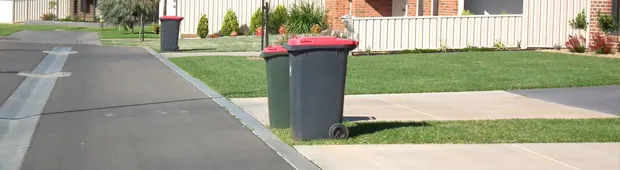
Residual waste is what remains after recycling and reuse: the material in your red kerbside bin, plus non-recyclable construction and demolition waste. In 2022-23, 7.7 million tonnes of residual waste went to NSW landfills.
Does using a rubbish removal service reduce the amount going to landfill?
A professional removal service can sort a load and divert items that can be recycled, donated, or repurposed, reducing what actually ends up at a landfill site. Council kerbside collections go directly to transfer stations, where sorting is more limited. For large household cleanouts or after a renovation, a removal service is more likely to divert materials from landfill than a trip to the tip.