Where Does All the Waste in Sydney Go?
Last updated: July 2026
When your bins are collected in Sydney, the contents split across four main destinations: landfill, a materials recovery facility (MRF) for recycling, a composting or organics processing site, or in rare cases a waste-to-energy plant. Nationally, Australia generated 75.6 million tonnes of waste in 2022-23, with around 29% going to landfill and 66% recovered overall.
By the Numbers
- Australia generated 75.6 million tonnes of waste in 2022-23
- Around 29% goes to landfill each year, roughly 22 million tonnes
- The national recovery rate is 66% overall; kerbside collection recovers around 39% of what households put out
- Only 12.5% of plastic is recycled nationally; the rest goes to landfill
- Households and local government account for 18% of total waste; construction and demolition is 39%, commercial and industrial 44%
- About 130,000 tonnes of Australian plastic ends up in waterways and oceans each year
What Happens to Each Bin After Collection
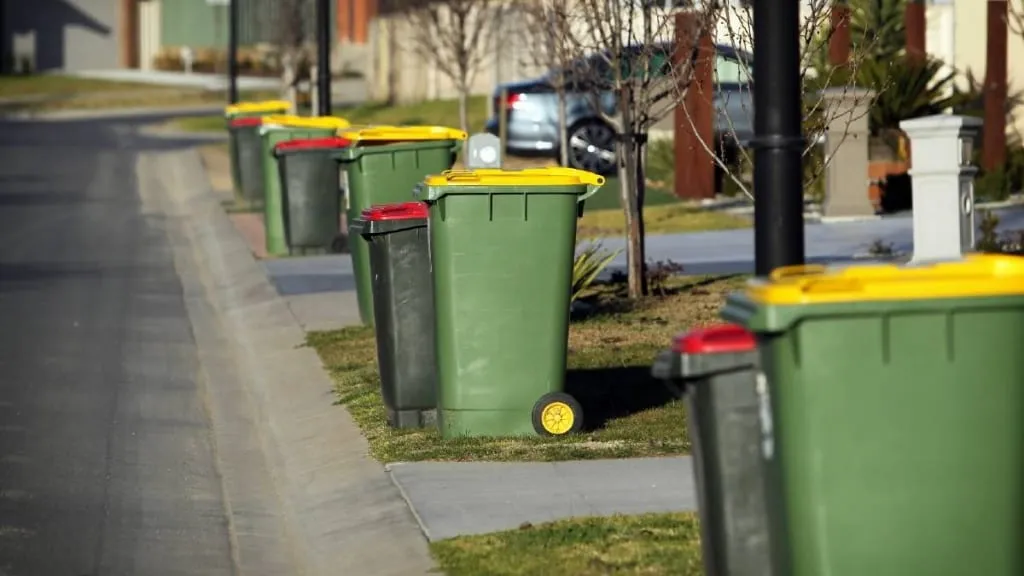
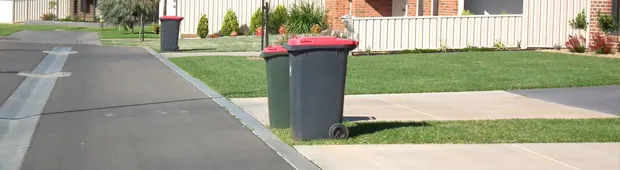
- Red lid (general waste): non-recyclable, non-organic items; goes to landfill (e.g. Lucas Heights, or Kimbriki on the Northern Beaches).
- Yellow lid (recycling): paper, cardboard, cans, plastic bottles, glass; goes to a MRF for sorting and processing.
- Green lid (organics): food scraps, garden waste; goes to a composting or organics processing facility.
Councils vary in which bins they provide and how often they collect. Check your council's website for current schedules.
Landfill: Sydney's Primary Waste Destination
When your red-lidded bin is collected, the contents head to landfill. Sydney's main remaining putrescible landfill is Lucas Heights, in the city's south; Kimbriki, on the Northern Beaches, also operates a landfill cell. These accept the general waste (non-recyclable, non-organic material) that has no viable next use.
Landfill remains the largest single disposal destination in Australia, receiving around 29% of all waste generated nationally. The environmental concern with landfill centres on methane: as organic material decomposes underground, it produces methane gas. Methane from the waste sector (landfills and wastewater) accounts for around 20% of human-caused methane globally, and it traps heat at over 80 times the rate of CO2 over a 20-year window. That is the main reason keeping food scraps out of the red bin matters.
What Happens to Your Yellow Recycling Bin
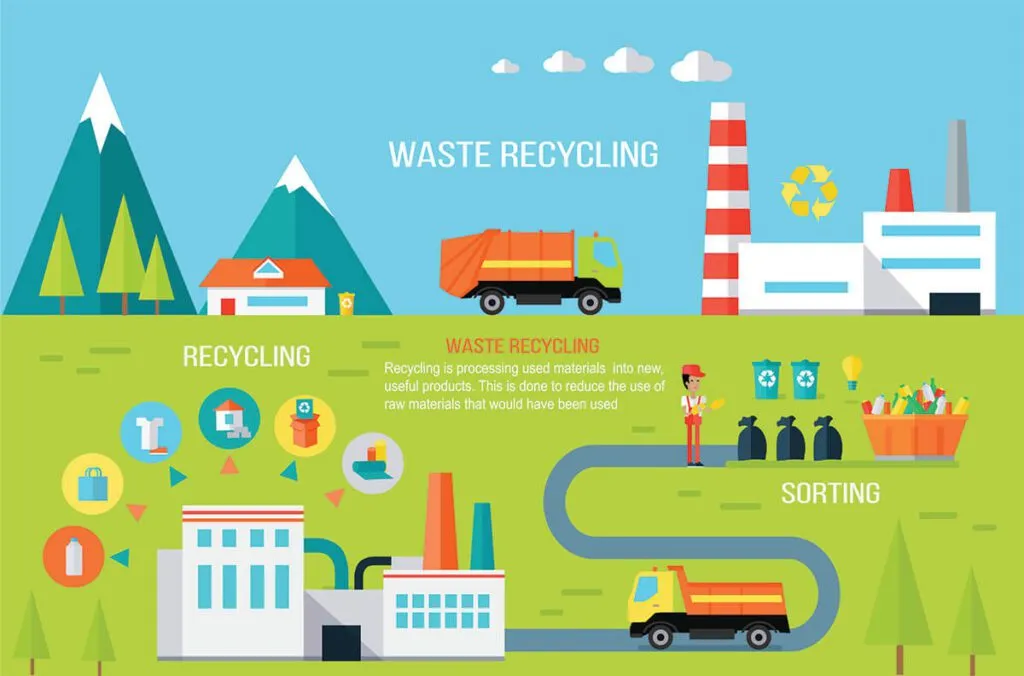
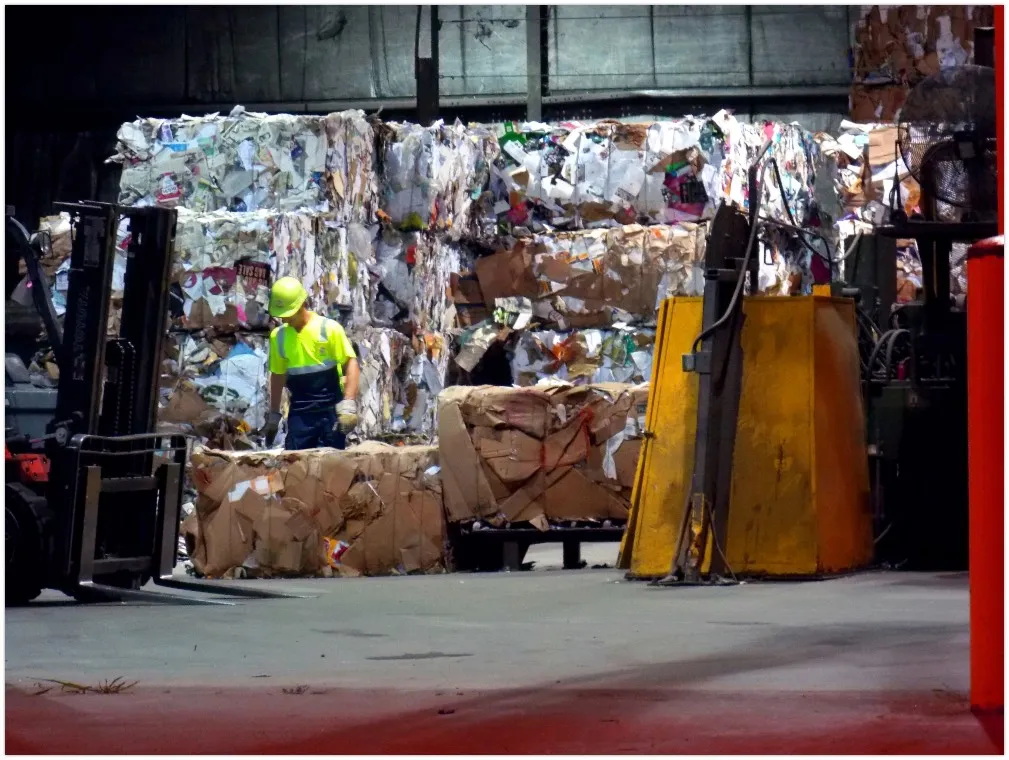
After collection, yellow-lidded recycling goes to a Materials Recovery Facility, or MRF. At the MRF, materials are sorted by a combination of people and machines into separate streams: plastic, metal, glass, and paper. Modern MRFs sort incoming material into separate streams for reprocessing, though some is lost to contamination and residue.
The main problem is contamination. Putting the wrong items in the yellow bin (plastic bags, food-covered containers, broken glass) can downgrade an entire truckload. "Wish-cycling" (placing something in the recycling bin and hoping for the best) is one of the main reasons recyclable material ends up in landfill anyway. The national plastic recycling rate is only 12.5%, partly because of contamination and partly because many plastic types have no viable downstream market.
How the Organics Bin (Green Lid) Gets Processed
Green-lidded bins go to composting and organics processing facilities, not landfill. At these sites, food scraps and garden waste are broken down into compost or soil conditioner.
Australia generated around 48 million tonnes of organic waste in 2021-22. Of the food waste, garden organics, timber and biosolids component (14.4 million tonnes), about 58% was recycled or recovered. The methane reduction benefit is significant: keeping organics out of landfill directly cuts the methane generated by decomposing material underground.
Not every Sydney council provides a green-lidded organics bin. Where they do, it is typically collected weekly or fortnightly.
Recycling and Recovery Facilities
Beyond the yellow bin, Sydney has a range of specialist recycling facilities for materials that need separate handling: electronics, hazardous household chemicals, metals, and tyres, among others. Local council websites list drop-off points and scheduled collection events for these streams.
The NSW "Waste Less, Recycle More" initiative is the state's primary program for expanding recycling infrastructure and reducing landfill reliance. At the federal level, the Recycling Modernisation Fund committed $190 million in federal funding (around $1 billion with state, territory and industry co-investment) to expanding recycling capacity nationally.
Waste-to-Energy: an Emerging Option
Waste-to-energy (WtE) plants burn non-recyclable residual waste at high temperatures (around 850 to 1,000 degrees Celsius) to generate electricity via steam-driven turbines. They are an alternative to landfill for material that cannot be recycled or composted.
Sydney does not currently operate large-scale residential WtE facilities, though the technology is part of NSW's longer-term waste infrastructure planning. The largest example in Australia is the Kwinana facility in Perth, which processes up to 460,000 tonnes of non-recyclable waste per year.
Separate from WtE, medical waste and certain pharmaceutical and hazardous materials undergo dedicated high-temperature incineration under strict regulatory controls. This is a separate process from household waste disposal.
Frequently Asked Questions
Where does Australia's rubbish go?
Most of it goes to one of three places: landfill (around 29% nationally), a recycling facility (sorted at an MRF), or an organics processing plant for food and garden waste. A small proportion goes to waste-to-energy plants.
What are the main landfills in Sydney?
Sydney's main remaining putrescible landfill is Lucas Heights, with Kimbriki on the Northern Beaches also operating a landfill cell. General household waste that cannot be recycled or composted is transported there after kerbside collection.
How does Australia get rid of rubbish?
The main method is still landfill, but Australian councils increasingly route waste through three-bin systems: general waste to landfill, recyclables to MRFs, and organics to composting facilities. The national recovery rate reached 66% in 2022-23, though the kerbside household recovery rate was around 39%. Waste-to-energy is an emerging pathway, with large facilities operating in Perth.
Where does most of our garbage go?
Landfill receives the largest single disposal share, around 29% of Australia's total waste by weight. By sector, construction and demolition produces 39% of total waste, commercial and industrial 44%, and households 18%.
Need same-day rubbish removal in Sydney?
Sydney councils handle kerbside bins on their schedule. For items that do not fit the bin system (furniture, appliances, renovation waste, garden clear-outs, mattresses), professional collection is often the faster option.
Paul's Rubbish Removal has been operating for over 15 years, is fully insured, and offers same-day collection if you book before 10am. Call 0407 125 125 or get a free quote online.