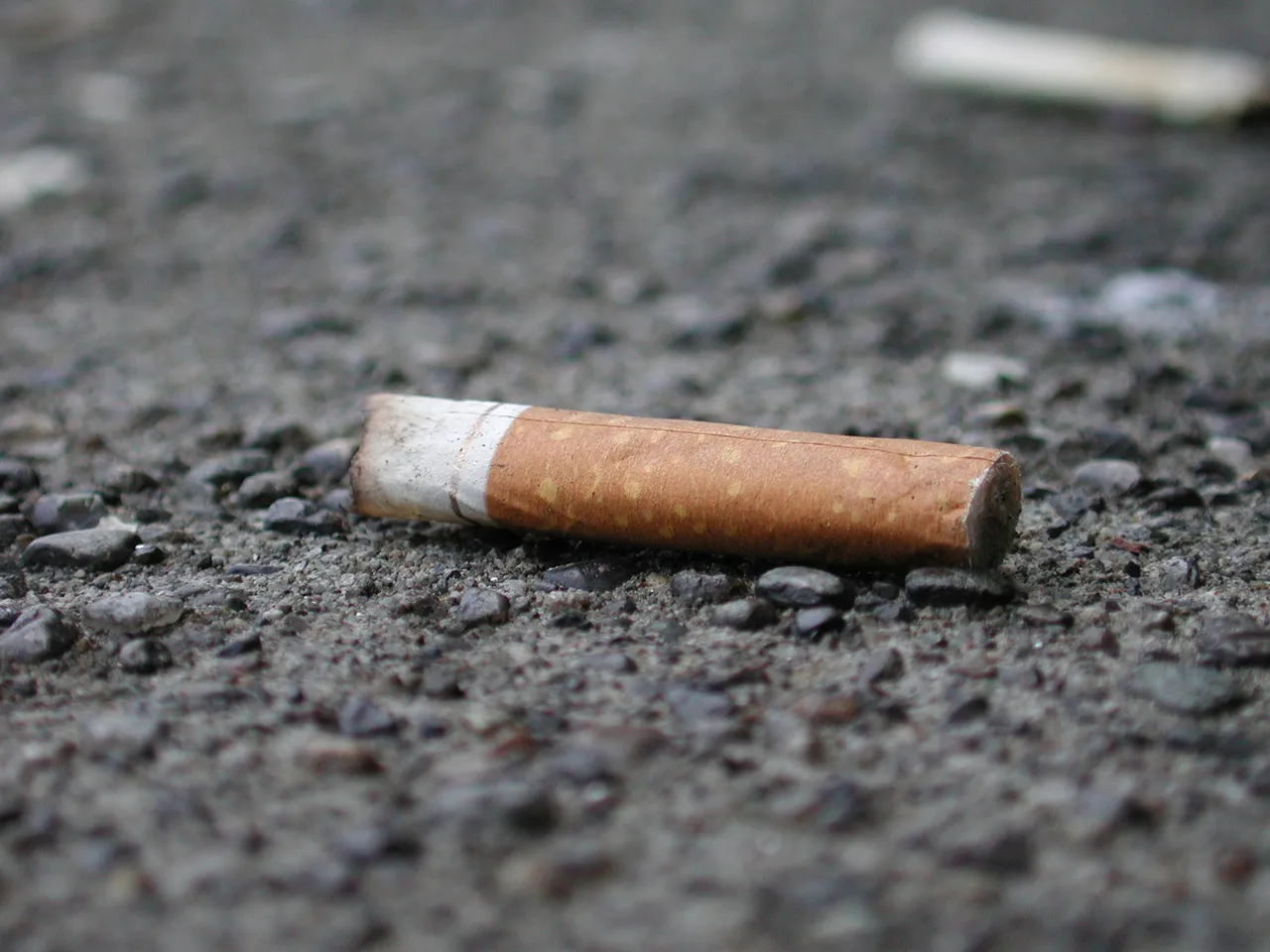
Cigarette butts are the most littered item in NSW. Up to 8.9 billion of them are littered across Australia every year, an estimated 1.32 billion of those in NSW alone. They're made of plastic, they don't break down quickly, and in NSW, dropping one is a fineable offence.
Last updated: August 2026
Why cigarette litter is a bigger problem than it looks
Cigarette filters look like cotton, but 98% of the fibres are plastic, cellulose acetate, packed tightly enough that it adds up to an estimated 1.69 billion pounds of cigarette butts winding up as toxic trash every year. NSW EPA describes that plastic as one that "does not readily biodegrade and can persist in the environment." Once littered, the filters leach some of the more than 7,000 chemicals found in tobacco product waste into soil and waterways, including at least 250 known to be harmful and 69 that are carcinogenic, among them named toxins such as arsenic and lead. A single butt can contaminate up to 1,000 litres of water, and one source estimates each smoked cigarette filter contains around 15,000 strands of microplastic fibre.
They don't break down quickly either, and how fast one does depends on conditions like rain and sun exposure rather than any natural process breaking it down. One cited study found a littered butt was only about 38% decomposed after two years; other estimates put full breakdown at up to 14 years.
None of that stays where it lands. NSW EPA notes littered butts are easily carried in stormwater runoff through drainage systems into local streams, rivers and waterways, and from there the same toxins wash into rivers and lakes and eventually the ocean.
Once they're in the water, the harm isn't just chemical. Cigarette butts have turned up in the stomachs of birds, turtles, whales and fish, where they affect digestion and potentially lead to poisoning or starvation. Around a third of the nearly 100 chemicals known to leach from butts are acutely or chronically toxic to aquatic species, and birds that line their nests with discarded butts may experience long-term genetic damage and other health risks due to their exposure to toxic chemicals.
Worldwide, an estimated 4.5 trillion cigarette butts pollute the environment every year. Each one individually weighs only around 310mg, which is part of why the tally runs into the billions rather than the millions, and the share hasn't shifted in decades: cigarette butts have made up 30% to 40% of everything picked up in annual international coastal and urban clean-ups since the 1980s. Nationally, they're among the most commonly littered items counted: nearly 38% of all litter collected in some studies, and 20.1% of everything counted in Australia's FY24 national litter report, up from 16.2% the year before. Cities spend between $3 million and $16 million a year cleaning it up.
Is it illegal to litter a cigarette butt in NSW?
Yes. Littering, including a cigarette butt, is an offence under the Protection of the Environment Operations Act 1997. Council officers and EPA authorised officers can issue on-the-spot fines:
- Unlit cigarette butt or small litter item: $160 on-the-spot fine (individual), maximum court penalty $5,000
- Lit cigarette or lit cigarette butt (classed as "dangerous material" under the Act): $1,000 on-the-spot fine (individual), maximum court penalty $25,000
These are current NSW figures as of the EPA's last update. Check the EPA's litter laws page for the latest before relying on a specific figure.
How a cigarette litter fine gets enforced in NSW
Cigarette butts are named explicitly in the law. Section 144A of the Protection of the Environment Operations Act defines litter to include "any glass, metal, cigarette butts, paper, fabric, wood, food" and a long list of other refuse. The Act's own examples of what counts as littering it include throwing a cigarette butt from a vehicle and simply stubbing a cigarette out on a footpath.
Littering generally is its own offence under section 145 of the Act, capped at $5,000 for an individual and $10,000 for a corporation. Littering dangerous material, defined in the Act to include a lit cigarette or lit cigarette butt, is a separate, heavier offence under section 145A, capped at $25,000 for an individual and $50,000 for a corporation.
It's not limited to obvious public land, either. "Public place" under the Act covers things like railway stations, bus stops, sports venues, parks, roads, footpaths and car parks, and its definition is broader still: any place that's open to or used by the public counts, regardless of whether entry involves a payment. The Act also extends to "open private place": private land that isn't inside a building, including gardens or yards around a private residence or industrial premises, farm or grazing land, and privately owned vacant land.
A fine isn't the only tool available. An authorised officer can first give the person who littered a verbal direction to remove it from the public place; ignoring that direction can escalate to an on-the-spot fine or a court-imposed penalty. Local councils and the EPA can also issue a clean-up notice requiring the litter be removed, with the same escalation for non-compliance.
Businesses aren't exempt, and the penalties are steeper. Littering a small item or unlit cigarette carries the same $160 on-the-spot fine for a corporation as for an individual, but a $10,000 maximum court penalty rather than $5,000. For dangerous material, that's a $5,000 on-the-spot fine and a $50,000 maximum penalty for a corporation.
None of this has fixed the underlying behaviour yet. EPA monitoring in 2024 found 56% of smokers observed at NSW sites still dropped their butt rather than binning it, and the agency's target is to cut that rate by half by 2030. That figure comes from the EPA's third Butt Litter Index, a survey run at over 110 locations across the state every two years.
What actually cuts cigarette litter
Fines alone haven't solved it, so the NSW EPA has also tested what changes smoker behaviour directly. In 2018, it ran a trial with 16 local councils across 40 smoking sites, testing four different strategies. Binning rates rose from 38% to 58% overall, a 53% increase, and the best-performing strategy at some sites lifted binning to 76%, a 144% increase.
The NSW Government has since published a Guide to prevent cigarette butt littering with detailed steps for land managers, local government, businesses and community groups; applying those steps to public places across the state could prevent almost 800 million cigarette butts from entering the environment. First published on 1 March 2020, the Guide was most recently updated in April 2025. For land managers and businesses working out where to focus first, the EPA has also built a "Butt Litter Check" tool: a roughly 30-minute on-site assessment that includes at least one 15-minute observation session of how smokers are actually disposing of their butts in that area.
On the ground, some councils, including Liverpool, also place dedicated butt bins in public areas for exactly this. Where interventions like these have been trialled, the reception has been strong: across grant-funded sites, 89% of community members said they supported the new infrastructure introduced, with the benefits reported as far outweighing any perceived disadvantages or concerns. The same research also checked for flow-on effects on non-smokers in the area, including risks like smoke drift.
At a national scale, a report by WWF has proposed a different lever. Placing direct responsibility on tobacco companies through a mandatory national product stewardship scheme could prevent around four billion cigarette butts being littered, funded by a levy of $0.004 (under half a cent) per cigarette that could raise $71 million a year. And in an Australian first, oyster mushrooms are being trained to feast on littered cigarette butts, breaking down their microplastics into a reusable product.
FAQ
Are cigarette butts biodegradable? No. Cigarette filters are 98% plastic fibres, cellulose acetate, and NSW EPA says that plastic "does not readily biodegrade and can persist in the environment." That's because the fibres are non-biodegradable in the first place: they won't break down through living organisms the way organic material does. Left in the environment, a butt can take years to break down instead: one study found only 38% decomposition after two years.
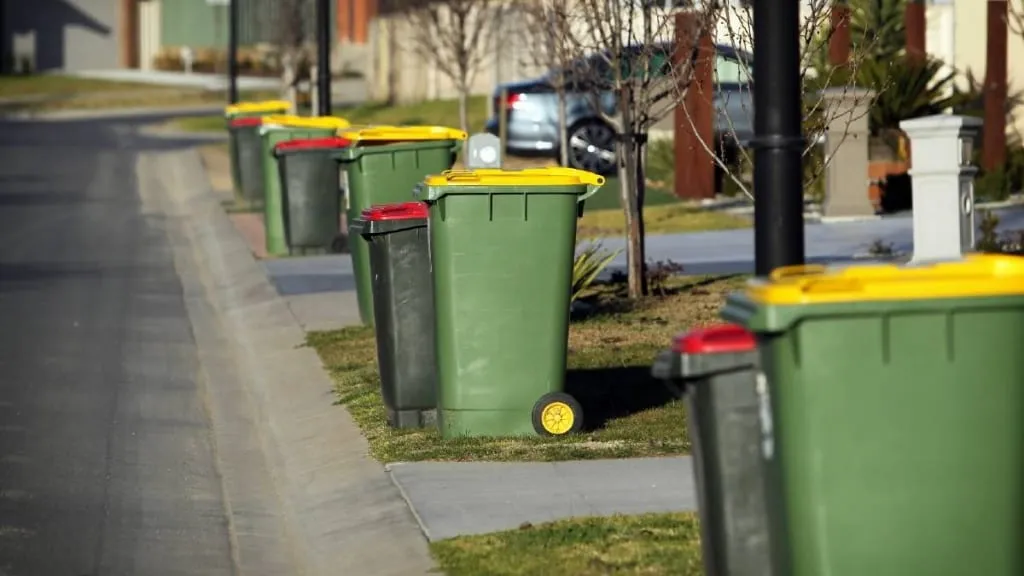
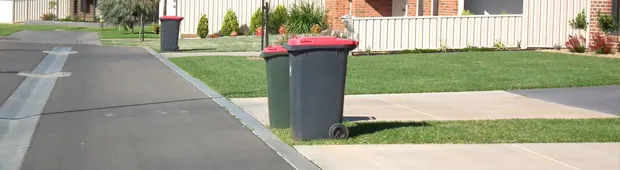
Which bin do cigarette butts go in? Once fully extinguished, cigarette butts go in your general waste (red-lid) bin, not the recycling (yellow-lid) bin. Never bin a lit or still-warm butt.
What's the fine for littering a cigarette butt in NSW? $160 on the spot for an unlit butt. If it's lit, that's classed as dangerous material under NSW law, carrying a $1,000 on-the-spot fine and a maximum court penalty of $25,000.
Are there bins just for cigarette butts? Some councils, including Liverpool, place dedicated butt bins in public areas. If one isn't nearby, an extinguished butt goes in general waste, never recycling.
If litter builds up faster than you can keep on top of it around your property, Paul's Rubbish can clear the rest: general rubbish collection with same-day booking before 10am. And if you spot a hotspot on public land, reporting it helps your council target the clean-up.