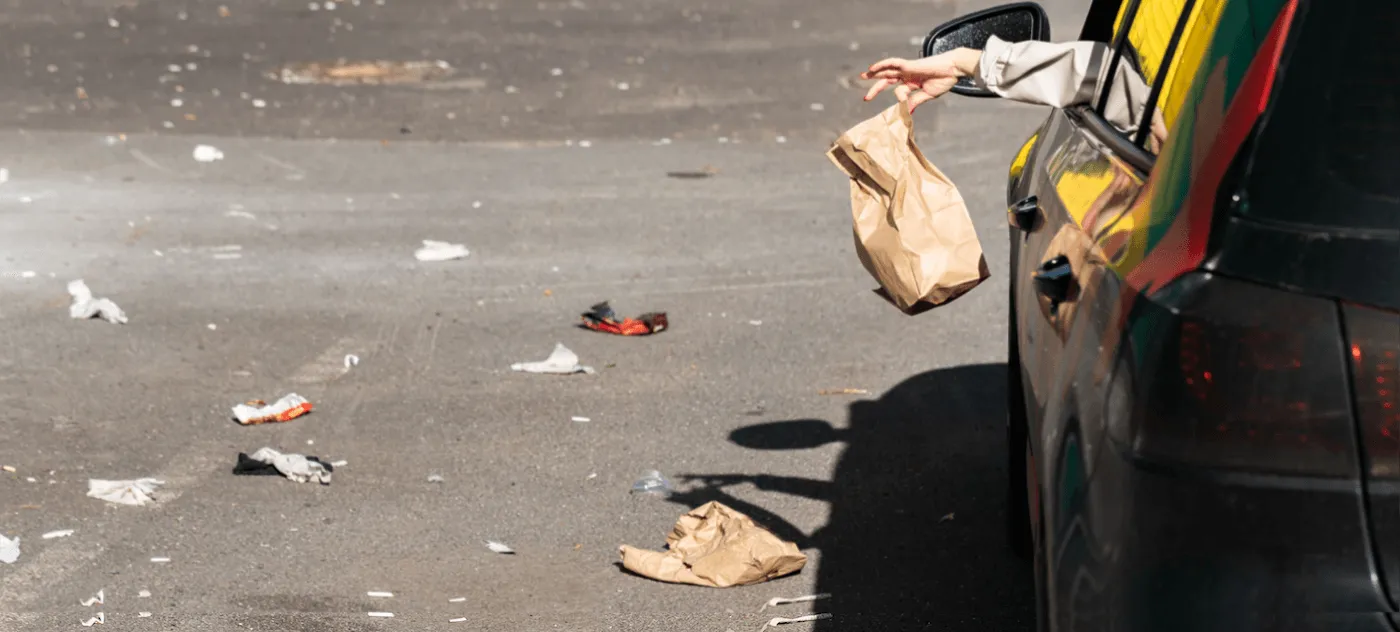
In NSW, throwing rubbish from a moving vehicle carries a $500 on-the-spot fine for individuals and $1,000 for corporations. Those figures come directly from the NSW EPA's litter-laws table, updated May 2024. Toss a lit cigarette butt and the fine jumps to $1,000 for individuals and $5,000 for corporations. Here is what the law says, how NSW's community reporting scheme works, and what your options are if you receive a penalty notice.
Last updated: July 2026
Most Common Items Dumped from Motor Vehicles in NSW
According to the NSW Environment Protection Authority, cigarette butts are consistently the most littered item in NSW. You would be surprised at what gets tossed on the roadside, including:
- Beverage containers
- Take away containers or packaging
- Cigarette butts
- Plastic items such as water bottles, caps, wrappers, and straws
- Small paper pieces
- Take away coffee cups
- Chip and confectionery wrappers
- Glass pieces
- Glass alcohol bottles
- Old furniture and other common household rubbish
Littering is most prevalent in densely populated cities like Sydney. Common dumping sites include town entrances and exits, service centres, and roadside areas.
Fines for Littering and Dumping from Motor Vehicles in NSW
The NSW EPA's Report to EPA program has been running since 2015. Since launch, roadside litter in NSW has fallen by over 40%. As of the EPA's last published update:
- Over 77,000 people are registered to report littering from vehicles
- Over 100,000 reports of vehicle littering have been submitted
- More than 55,000 penalty notices have been issued
The standard on-the-spot fine is $500 for individuals and $1,000 for corporations. Fines do not escalate for repeat offences under the POEO Act.
How Littering Law Works in NSW
The Protection of the Environment Operations Act 1997 (POEO Act) is the primary legislation covering littering in NSW. Under sections 145-146, the vehicle owner is liable for any litter discarded from their vehicle unless they provide a statutory declaration naming who was actually responsible.
Current Fine Amounts (NSW EPA, May 2024)
- Small item or unlit cigarette: Individual (on-the-spot) $160, Corporation (on-the-spot) $160, Maximum court penalty $5,000 / $10,000
- Other litter, including from a vehicle: Individual (on-the-spot) $500, Corporation (on-the-spot) $1,000, Maximum court penalty $5,000 / $10,000
- Dangerous material (lit cigarette, e-cigarette, glass, syringe, lithium battery): Individual (on-the-spot) $1,000, Corporation (on-the-spot) $5,000, Maximum court penalty $25,000 / $50,000
- Depositing more than 50 litres or 50 kg: Individual (on-the-spot) $1,000, Corporation (on-the-spot) $5,000, Maximum court penalty $25,000 / $50,000
Note: fines do not increase during fire season under the POEO Act. However, the NSW Rural Fire Service has separate penalties under the Rural Fires Act 1997 for cigarette butt littering from vehicles, and those penalties do increase during Total Fire Bans.
What Counts as "Dangerous" Littering?
Dangerous material attracts a higher fine. The POEO Act (section 145A) defines dangerous material as:
- A lit cigarette or cigarette butt
- An e-cigarette
- A lithium battery or device containing one
- A syringe
- Glass
- Oil, fuel, grease, paint, or solvent
Throwing any of these from a vehicle attracts a $1,000 on-the-spot fine for individuals and $5,000 for corporations, with a maximum court penalty of $25,000 or $50,000 respectively.
What to Do If You Receive a Penalty Notice
If you receive a penalty notice for vehicle littering, you have four options via Revenue NSW:
- Pay the fine
- Nominate the person responsible (via statutory declaration)
- Request a formal review
- Elect to have the matter heard in court
If you were not driving or in the vehicle when the litter was discarded, you can submit a statutory declaration to Revenue NSW naming the person who was. The notice will then be redirected to that person. Receiving a fine multiple times does not increase the per-incident amount; it stays at $500 per incident for individuals.
How to Classify Unwanted Items as Litter?
Litter is defined as follows in section 144A of the Protection of the Environment Operations Act 1997 (POEO Act):
a) any solid or liquid domestic or commercial refuse, debris, or rubbish deposited in or on a place, whether or not it has any value when or after being deposited in or on the place, including any glass, metal, cigarette butts, paper, fabric, wood, food, abandoned vehicles, abandoned vehicle parts, construction or demolition material, garden remnants and clippings, soil, sand, or rocks.
and
b) any other material, substance, or thing deposited in or on a place if its size, shape, nature, or volume makes the place where it has been deposited disorderly or has a negative impact on its proper use.
Individuals and corporations disposing of any of the above litter in public or private open space areas will be fined.
Litter in Public Place
The term "public place" in the POEO Act's dictionary includes:
(a) a public place as defined by the Local Government Act of 1993, and (b) a State forest or flora reserve as defined by the Forestry Act of 2012, and (c) a national park, a state recreation area, a historic site, a nature reserve, a state game reserve, or an Aboriginal area as defined by the National Parks and Wildlife Act of 1974, and (d) a place that is open to the public or is used by the public, whether or not for a fee or other consideration, whether or not the place is ordinarily so open or used, and whether or not the public to whom the place is so open or used is limited to a specific group of people.
Public places include railway stations, bus stops, sports venues, parks, roads, and footpaths.
Litter in Open Private Place
'Open private place,' according to section 144A of the POEO Act, means:
(a) a private location in or on land that is not contained within a building on the land, or (b) a private location near or on the water.
Gardens or yards around private residences or industrial premises, farm or grazing land, and privately-owned vacant land are examples of open private places.
Does advertising material count as litter?
Under section 144A of the POEO Act, advertising material is considered litter if it contains advertising or promotional items. These include:
- Real estate agent's leaflets
- Newsletters with advertisements for retail, sporting, educational, community, or political organisations or activities
- Refrigerator magnets promoting a tradesperson's services
- Packets of a free sample of a product, such as detergent
Litter Law does not apply to any of the following:
- Parking tickets left under a car's windshield wiper
- Newsprint (and inserts)
- Information about the Roads and Maritime Services mobility parking scheme (left on a vehicle)
- Anything so large in shape or volume that it cannot or should not be deposited in a letterbox, newspaper receptacle, or under a door
- Anything deposited by or with the consent of a place's custodian
More information about advertising materials can be found on the EPA's website.
How to Report Motor Vehicle Litterers
Any NSW resident can report vehicle littering via the Report to EPA online platform or mobile site. You do not need a smartphone to register, but you will need photo ID.
What you must record at the scene:
- The vehicle's registration number
- Street, suburb, nearest cross street
- Vehicle make, body type, colour
- Date and time
- Type of litter discarded
- Position of the person who discarded it (driver, front passenger, rear)
- Whether litter was thrown, blown, or dropped
You have 14 days from the incident to submit the report, but the EPA recommends submitting as soon as possible. Photos and video are not mandatory but strengthen the report; you can attach up to three photos (5 MB each) or a video file (up to 25 MB).
Safety note: it is illegal to use a mobile phone while driving. If you are behind the wheel, ask a passenger to record the details.
The EPA verifies each report against Roads and Maritime Services records and reviews at least 18 mandatory information categories before issuing a fine. If the report passes those checks, a fine is issued within 1 to 3 days.
Note on interstate vehicles: the EPA can process reports about vehicles registered in Victoria, Queensland, and the ACT where the offence occurred in NSW. Reports about vehicles registered in Western Australia, South Australia, the Northern Territory, or Tasmania cannot be acted on.
Dealing with Bulk Rubbish Dumped Near Your Property?
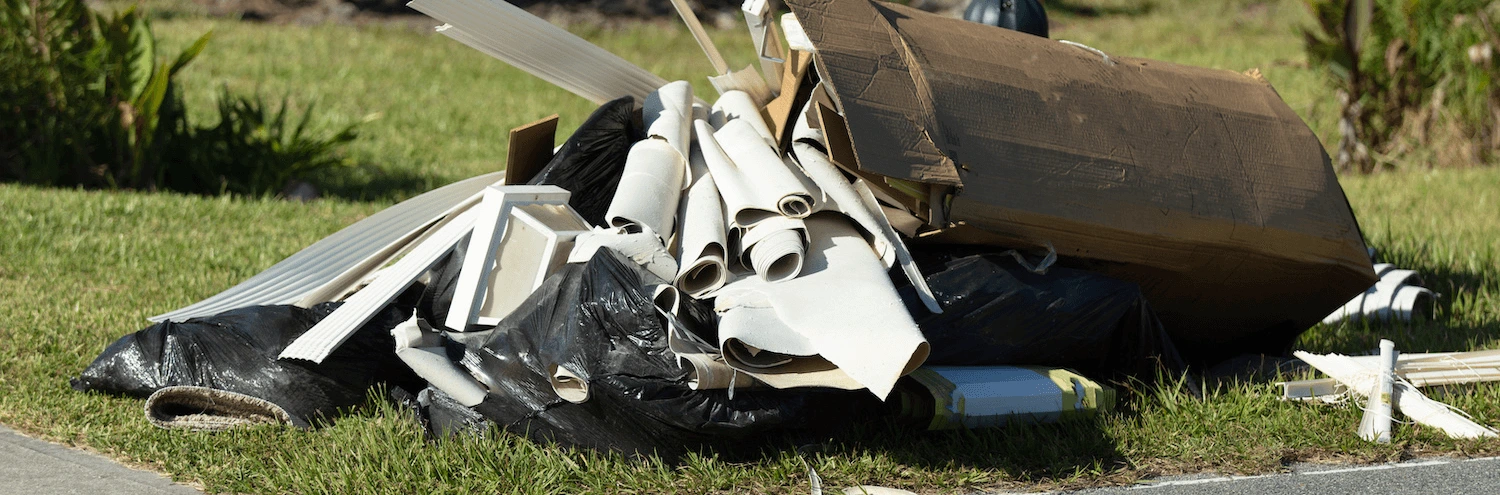
Vehicle littering laws cover small items, but some people dump entire loads: mattresses, old furniture, broken appliances. If you have found a bulk illegal dump on your property or need to clear out vehicle-related waste legally, Paul's Rubbish Removal collects from anywhere in the Sydney metro area. Book before 10am for same-day collection. Call 0407 125 125 or see our rubbish removal services page.
Frequently Asked Questions
Can someone report me for littering from my car?
Yes. Any NSW resident who witnesses littering from a vehicle can file a report via the NSW EPA's Report to EPA platform. If the report passes the EPA's verification checks, a penalty notice is issued within 1 to 3 days.
What is the fine for throwing a cigarette out of a car window?
A lit cigarette is classified as "dangerous material" under the POEO Act. The on-the-spot fine for an individual is $1,000; for a corporation it is $5,000. The maximum court penalty is $25,000 for individuals and $50,000 for corporations. Note: separate penalties under the Rural Fires Act 1997 can apply during Total Fire Bans, enforced by the NSW Rural Fire Service.
How long do I have to report someone for littering?
Reports must be submitted to the EPA within 14 days of the incident. Submit as soon as possible and keep any photos or notes as supporting evidence.
What if I wasn't driving when the litter was thrown?
If you are the registered owner but were not in the vehicle, you can submit a statutory declaration to Revenue NSW naming the person who was responsible. The penalty notice will be redirected to them.