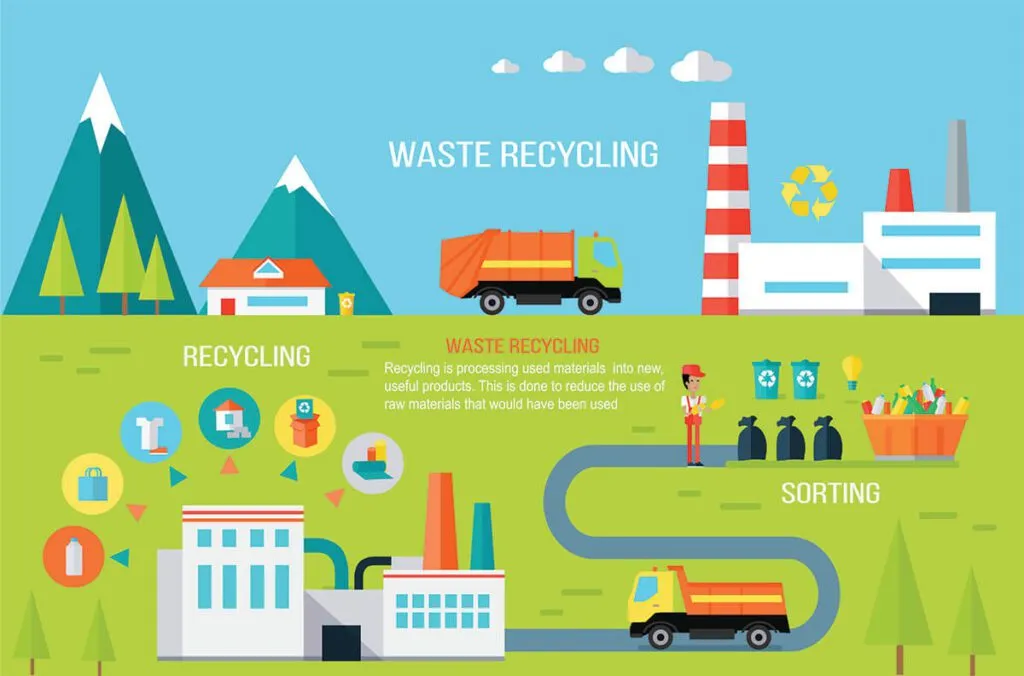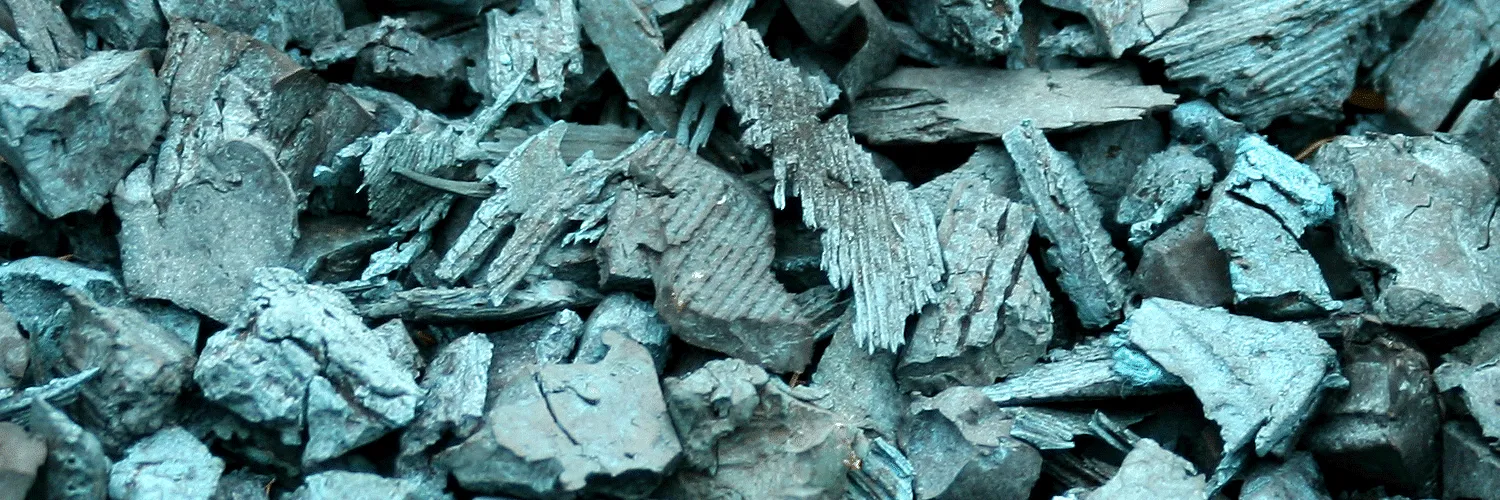
Rubber is recycled through a four-stage process: collection, shredding, separation into rubber, steel, and fibre streams, and processing into crumb rubber or chips for reuse. In Australia, 87% of passenger, bus, and truck tyres are now recovered through this system (Tyre Stewardship Australia, 2023/24). The main challenge is that rubber cannot go in a household recycling bin: tyres and most rubber items need specialist collection or a drop-off at a licensed facility.
Last updated: July 2026
Rubber Recycling in Australia: The Current Picture
Australia generates 56 million equivalent passenger units (EPUs) of used tyres each year (Tyre Stewardship Australia). As of 2023/24:
- 66% of Australia's used tyres go to an environmentally sound use
- 87% of passenger, bus, and truck tyres are recovered
- Only 13% of off-the-road tyres (mining, earthmoving equipment) are recovered
- Just 16% are recovered into domestic markets
The gap between collection and domestic processing is the industry's pressure point. Tyre Stewardship Australia (TSA), the national ACCC-authorised scheme that oversees this system, funds research and market development to close it.
How the Rubber Recycling Process Works
Rubber arrives at a recycling facility in two main forms: tyres (the dominant stream by volume) and non-tyre rubber items such as hoses, conveyor belts, and mats. The four key steps after collection are:
Step 1: Sorting and preparation
Items are sorted by rubber type and checked for contaminants. Whole tyres are separated from shredded or cut rubber.
Step 2: Mechanical shredding
Tyres and larger rubber items are shredded or granulated using ambient grinding (room temperature) or cryogenic grinding (using extreme cold to make the rubber brittle before pulverising).
Step 3: Separation of material streams
Shredding exposes three recoverable materials: rubber granules, steel wire reinforcement, and synthetic fibre. Each is separated mechanically.
Step 4: Processing into end products
Rubber granules are refined into crumb rubber or chips at varying particle sizes. Steel is baled and sent to steel recyclers. Fibre goes to approved recovery processors.
Crumb rubber is the main output. Common uses include civil construction, landscaping, playground surfaces, and industrial infrastructure.
The Vulcanisation Challenge
Vulcanisation is the process that makes rubber durable: sulphur cross-links are formed during heating, creating the intermolecular bonds that give rubber its strength and resistance to degradation. These same bonds make rubber hard to break down for recycling.
The main response is devulcanisation: breaking those sulphur bonds to return rubber to a reprocessable state. TSA is actively funding research into devulcanisation and pyrolysis as processing technologies, assessing their material circularity and environmental outcomes. The field is developing; no single method has become the standard process in Australia yet.
What to Do with Rubber Items in Sydney
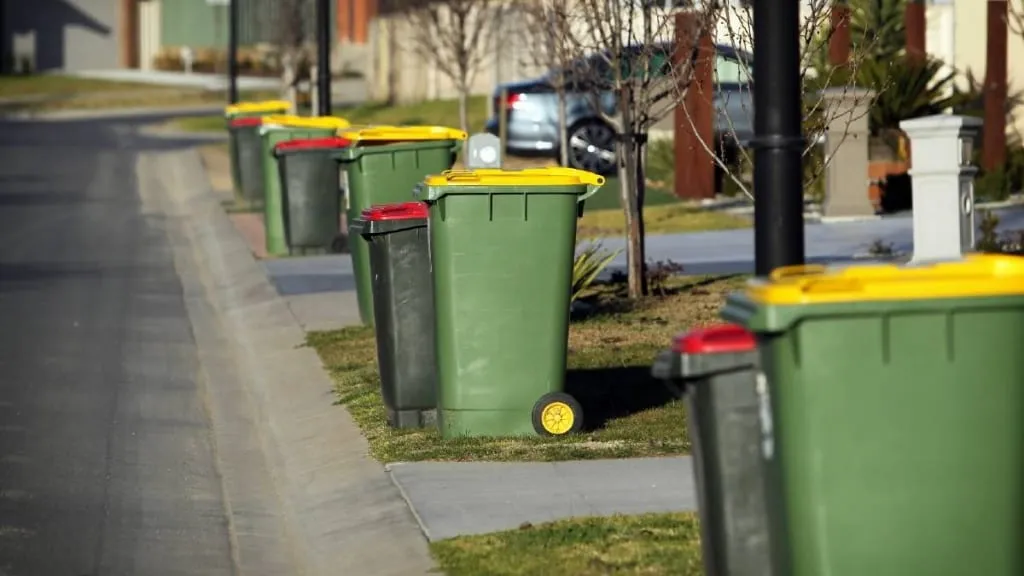
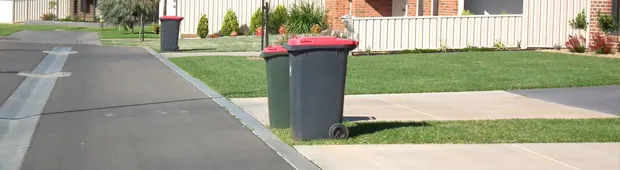
Most rubber items do not belong in a household recycling bin. The yellow-lid kerbside bin in NSW is intended for paper, cardboard, glass, and rigid plastics; rubber is generally not accepted. Putting rubber in the wrong bin sends it to landfill.
Practical options for Sydney residents and businesses:
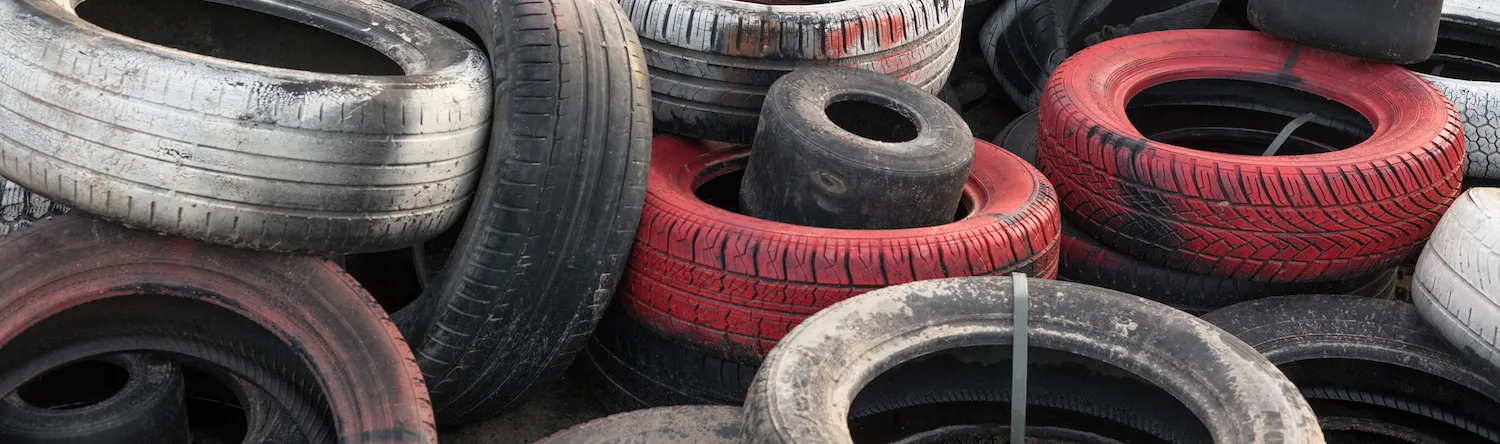
- Car and truck tyres. Many tyre retailers will take back your old tyres when fitting new ones, though some charge a small handling fee. It is worth asking when you book the fitting.
- Hard waste collection. Hard waste collection policies vary by council and LGA. Check your local council's hard waste schedule and accepted-items list to see what is covered in your area.
- Specialist recyclers. For large volumes or unusual rubber items, TSA's Find Services tool lists accredited collectors and recyclers by postcode: tyrestewardship.org.au/find-services.
- Rubbish removal services. For bulky rubber items that will not fit in a bin or that a council will not accept, a rubbish removal service can collect and transport to a licensed facility.
What Recycled Rubber Becomes
Once tyres and rubber items go through the shredding and separation process, the recovered materials feed into several established product categories:
Crumb rubber is the highest-volume output. Ground to varying particle sizes, it is used in:
- Playground surfaces and rubber mulch
- Running tracks and sports field underlays
- Asphalt rubber for road surfaces, where it extends road life and reduces noise
- Gym and commercial flooring
Steel wire recovered from tyres is baled and sold to steel recyclers for use in manufacturing and construction.
Synthetic fibre from the tyre structure goes to approved fibre recovery processors.
TSA's Life Cycle Assessment research found clear carbon and resource savings when tyre-derived materials are used in road applications compared to virgin materials.
Summary
Rubber recycling in Australia is a regulated, four-stage process: collection, shredding, separation into rubber, steel, and fibre streams, and processing into crumb rubber and other products. Tyre Stewardship Australia reports 87% recovery for passenger and commercial tyres as of 2023/24, though only 16% of that goes into domestic processing. The gap between recovery and local reuse is where the industry is still developing.
For Sydney residents, the practical takeaway is simple: rubber tyres and most large rubber items cannot go in the household recycling bin. Tyre retailers, licensed recyclers, and rubbish removal services are the compliant options.
Frequently Asked Questions
How is rubber recycled?
Rubber is recycled through collection at a licensed facility, mechanical shredding, and separation into rubber granules, steel wire, and synthetic fibre. The rubber granules are processed into crumb rubber for use in civil construction, landscaping, playground surfaces, and industrial infrastructure. Tyres are the dominant rubber stream by volume in Australia.
Can rubber be recycled in Australia?
Yes. Australia operates a national voluntary scheme through Tyre Stewardship Australia (TSA), which oversees collection and recycling of end-of-life tyres. In 2023/24, 87% of passenger, bus, and truck tyres were recovered through this system. Non-tyre rubber items such as hoses and mats have fewer dedicated collection pathways; options vary by council and item type.
What is the difference between natural and synthetic rubber recycling?
Natural rubber can be reprocessed more readily than synthetic rubber because the chemical bonds formed during its production are less complex. Synthetic rubber variants such as styrene-butadiene rubber (SBR), which make up most tyre rubber, require more processing to break down the vulcanisation cross-links. Both types go through the same shredding and separation process at licensed facilities.
How hard is it to recycle rubber?
Recycling rubber is technically feasible but not simple. The main challenge is vulcanisation: the sulphur cross-linking that makes rubber strong also makes it resistant to reprocessing. Mechanical shredding (crumb rubber production) is the established commercial method. Chemical devulcanisation and pyrolysis are being researched as higher-value options.
Are rubber items recyclable in the household bin?
No. Rubber items, including tyres, mats, and hoses, are not accepted in the household yellow-lid recycling bin in NSW. Tyres should be returned to a tyre retailer at swap-out time or taken to a licensed tyre collection point. For bulky rubber items, a rubbish removal service or scheduled hard waste collection may be the practical option.