


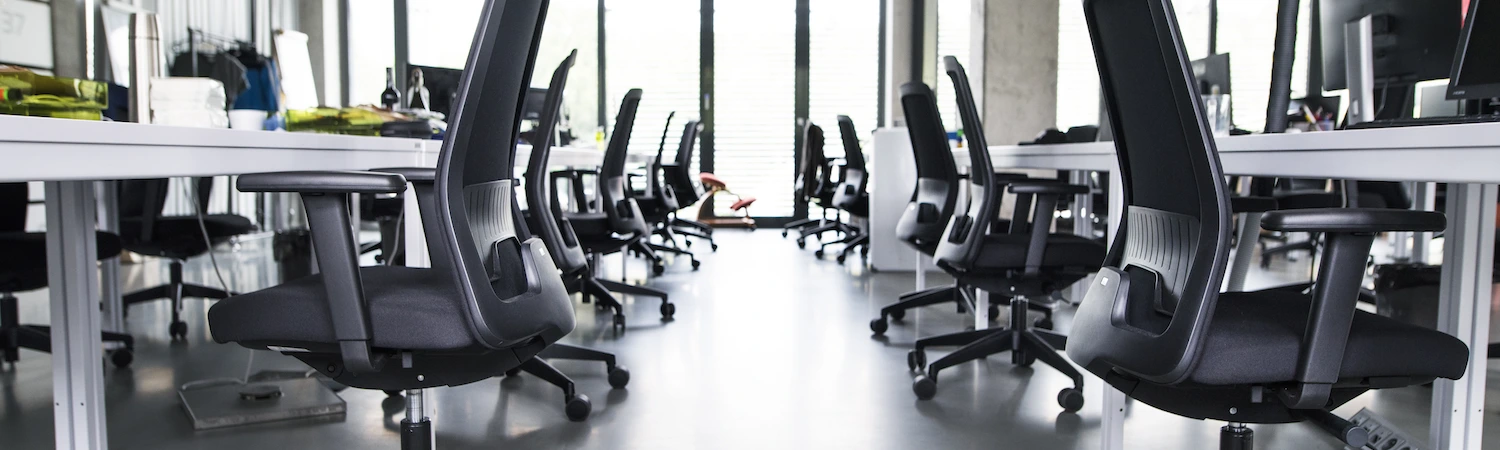
An office clearance means sorting furniture, IT equipment, fixtures and confidential paperwork all at once, usually against a lease deadline. Sydney council can't collect it for you: City of Sydney's own guidance, published 13 May 2026, explicitly excludes business or commercial waste from its free bulky-item pick-up. This checklist covers what to do instead.
Last updated: August 2026.
Why council can't help with an office clearance
If you've used a council bulky-item pick-up at home before, the same option isn't there for a business. City of Sydney's free weekly pick-up service is for residents, and its own booking rules list "business or commercial waste" as one of the reasons you shouldn't book a collection. The council describes the service itself, plainly, as "a free service for City of Sydney residents."
If you've tried to book a pick-up and been told your address is ineligible, business rates may be why. City of Sydney says that can happen if your property is business rated, meaning it pays business rates, which don't include council waste and recycling services. Owners of business-rated properties need to manage their own waste services, and if you're renting one, the council's advice is to speak to your landlord or real estate agent to arrange a collection instead.
Putting furniture or boxes out on the street isn't a workaround either. City of Sydney is explicit that leaving items out without a booking, or putting them out too early before an agreed collection day, is illegal dumping. Since a business can't get a booking for this service in the first place, that route is closed off entirely, not just inconvenient.
This is City of Sydney's own rule for its own area, not a blanket Sydney-wide rule. If your office is in a different council area, check that council's bulky-waste terms directly before assuming the same exclusion applies to you.
Legal and paperwork checklist before you clear the office
Sorting the physical items is only half the job. A second set of obligations sits underneath it: the paperwork and compliance side of a clearance, which matters just as much as the removal itself and is easy to leave until the last minute. A few of these apply before the last box goes out the door, whether you're moving premises or closing the business altogether.
Records you have to keep. Government small-business guidance is clear that you must keep some business records after your business closes, including financial and transaction records and employee records. As a general rule, that's five years for business records and seven years for employee records, though this varies by industry and record type, so it's worth checking what applies to yours specifically rather than assuming the general figure covers everything.
Records you can destroy or de-identify. Anything you don't need to keep, particularly customer information, should be securely destroyed or de-identified rather than binned as-is. If your business is covered by the Privacy Act, this isn't just good practice: Australian Privacy Principle 11 requires an APP entity to take reasonable steps to destroy or de-identify personal information once it's no longer needed for the purpose it was collected for.
What "securely destroyed" actually means. The Office of the Australian Information Commissioner is specific on this point: disposing of hard-copy records through general garbage or recycling collection would not normally count as taking reasonable steps to destroy them, unless the documents have already been pulped, burned, pulverised, disintegrated or shredded. For old computers, servers and drives, the equivalent step is sanitising the hardware so the data can't be recovered, or physically destroying it where sanitising isn't possible. Reasonable steps also aren't just about the physical method. The OAIC's own guidance expects organisational measures alongside the technical ones: a policy for what gets kept and what gets destroyed, staff trained on it, and a record of what was actually destroyed and when. What counts as "reasonable" scales with the business too, taking into account things like its size, resources and how complex its data handling is, so a two-person office isn't held to the same bar as a large organisation. Arrange destruction as its own step, separate from the general rubbish clearance, and before the equipment or paperwork leaves the building.
Leases and equipment. If your business leases the property, vehicles or equipment, the lease needs to be formally ended when you close or move out.
Utilities and mail. Before the last day, disconnect your phone, power, water and internet, and redirect your mail through Australia Post.
What to sort into each category
Government small-business guidance lists the assets a closing or moving business typically deals with as including remaining stock, tools, equipment and machinery, and furniture, fixtures and fittings, on top of the paperwork and lease obligations already covered above. For a Sydney office, that generally sorts into three practical piles.
- Furniture and fixtures - desks, chairs, shelving, meeting tables. See furniture removal.
- IT and electronics - old computers, monitors, printers, servers. Wipe or destroy any storage first, per the records section above, then see electronics removal.
- General office rubbish - everything else that isn't being kept, sold or donated. See office rubbish removal.
It's worth sorting the IT pile before anything gets physically moved, since that's where the confidential data usually sits, and doing it last tends to mean doing it in a rush.
Selling or donating what still has value
Not everything needs to go to landfill or into a removal job. Government small-business guidance recommends researching selling prices and the platforms available for your assets before you dispose of anything. If you're closing the business rather than just moving premises, it specifically flags a closing-down sale as a way to move excess stock at a discount rather than binning it. The same logic applies to office furniture and equipment that's still in decent condition: selling it, even at a discount, gets more value out of it than a straight disposal job does, and cuts down what actually needs removing on clearance day itself. It's worth doing this sorting before the clearance date rather than during it, so a stack of desks and monitors isn't sitting in a corner with nowhere to go while a decision gets made on the day.
An office clearance timeline
- Confirm your move-out or close-down date, and check what your lease requires when you formally end it.
- Sort everything into keep, sell, donate and dispose piles, and research selling prices for anything with resale value before you commit it to a pile.
- Book removal for what's left. Office rubbish removal can usually be arranged same-day if you book before midday.
- Arrange secure destruction of confidential paperwork and old drives as its own step, separate from the general clearance, rather than bundled in with everything else going out the door.
- Keep what you're required to keep, and destroy or de-identify what you're not. As a general rule that's five years for business records and seven for employee records, though it varies by industry and record type.
- Disconnect your phone, power, water and internet, and redirect your mail before the last day.
FAQ
Does Sydney council collect office rubbish for free? No. City of Sydney's free bulky-item pick-up is for residents and explicitly excludes business or commercial waste. If your property is business-rated, the council's advice is to arrange your own waste collection, or speak to your landlord if you're renting.
How long do I need to keep business records after moving or closing my office? Generally five years for financial and transaction records and seven years for employee records, though this can vary by industry and record type.
What should happen to old computers and confidential paperwork? Destroy or de-identify anything you don't need to keep. Hard-copy records generally need to be shredded, pulped or otherwise destroyed rather than simply binned, and old hardware needs to be sanitised or physically destroyed so the data on it can't be recovered. If your business is covered by the Privacy Act, this is a legal requirement under Australian Privacy Principle 11, not just good practice.
Is it illegal to leave old office furniture on the street in Sydney? Yes, if you don't have a booking for it. City of Sydney treats items left out without a booking, or put out too early, as illegal dumping, and business waste isn't eligible for a booking in the first place.
Do I need to formally end my lease when I move out or close the office? Yes. If your business leases the property, vehicles or equipment, the lease needs to be formally ended as its own step when you close or move out, rather than assumed to lapse automatically once you've handed back the keys.
Can you clear an office in Sydney on short notice? Yes. Office rubbish removal can usually be arranged same-day if you book before midday.
Get the physical clearance sorted
Paul's Rubbish Removal handles the physical side of an office clearance, furniture, e-waste, general office rubbish, across Sydney, with same-day collection available if you book before midday. See office rubbish removal or call 0407 125 125 for a free quote.
If you're not clearing out entirely and just want to cut everyday office waste, see 5 types of office junk and simple ways to reduce office waste.