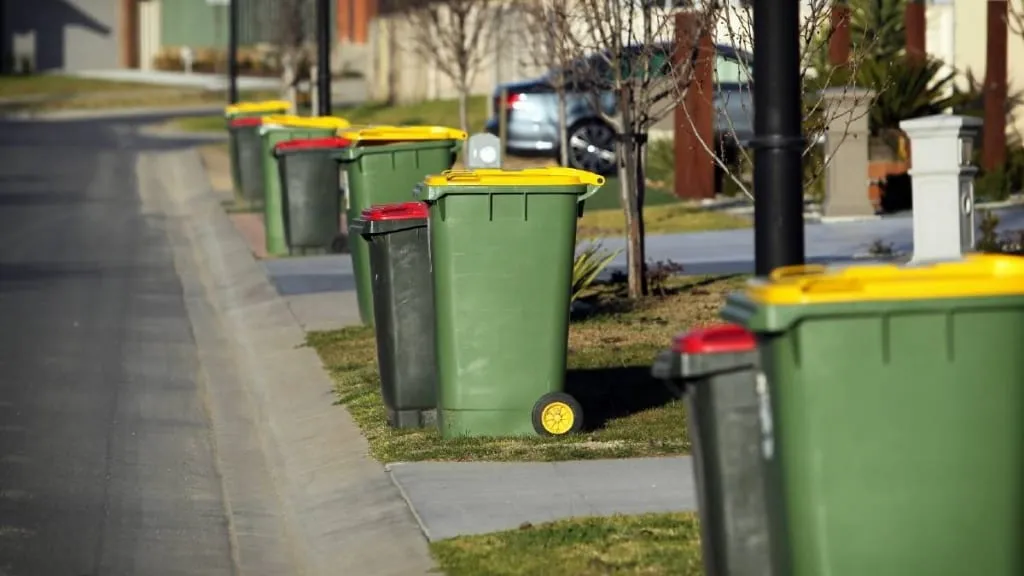
The yellow-lid bin takes hard plastics, glass bottles and jars, paper and cardboard, and aluminium and steel cans, placed in loose and empty, never bagged. It does not take soft plastics, nappies, textiles, batteries, crockery or garden hoses. The exact list varies by council, which is the part most guides skip. Last updated: September 2026.
Not all plastic is the same, and neither is all glass. A drink bottle and a drinking glass look similar enough to guess wrong, and guessing wrong is what gets a load rejected. Below is what actually goes in, what doesn't, and why the answer changes depending on which council empties your bin.
What Goes In The Yellow Bin?
What you CAN throw in the yellow recycling bin:
Containers & packaging. Plastic bottles, tubs and containers, glass bottles and jars, and steel and aluminium cans all go in the yellow bin, along with empty aerosol cans. Milk and juice cartons are accepted in most areas too.
Paper & cardboard. Newspapers, magazines and cardboard boxes are fine loose in the bin. Some councils, including North Sydney, accept a clean pizza box; if grease has soaked through, it belongs in general waste instead.
Before putting it into the bin
Empty and rinse containers before they go in; food and liquid residue is one of the most common reasons a load gets rejected as contaminated. Whether lids stay on or come off depends on your council, covered below.
What you CAN'T throw in the yellow recycling bin:
Soft plastics. Anything that scrunches in one hand and doesn't spring back, plastic bags, bread bags, cling wrap, pasta bags, isn't accepted in any Sydney council's yellow bin. REDcycle, the supermarket soft-plastics drop-off scheme, stopped operating in 2022. A narrower replacement now runs through an ACCC-authorised group of around 107 Coles, Woolworths and ALDI stores across NSW and Victoria, per the most recently published figures, so check with your local store rather than assuming the old scheme is back everywhere.
Bagged recycling. Everything above goes in loose. A bag of correctly sorted recyclables still gets pulled out and binned as contamination if it's inside another bag.
Nappies and food waste. Neither is recyclable through the kerbside yellow bin service, whatever council runs it.
Textiles. Clothing, towels and linen don't belong in the yellow bin either.
Crockery and window glass. Drinking glasses, plates, mirrors and window panes are glass, but not the right glass. They have a different melting point to bottle and jar glass and contaminate the load if mixed in.
Batteries. Never in a kerbside bin of any colour, red, yellow or green. Loose batteries and butane canisters can cause fires in collection trucks. Take them to a Community Recycling Centre or a battery drop-off point instead.
Garden hose. Hoses aren't accepted in any Sydney council's yellow bin; general waste or a council bulky-item collection is the right bin instead.
Why "check your council" isn't a dodge
NSW doesn't run one set of bin rules. Local councils run their own kerbside recycling collection, and what's accepted differs from one to the next. Two inner-Sydney examples show how far that goes:
Inner West Council asks residents to leave lids on plastic bottles and screw the metal lid back onto glass jars before they go in the bin. See Inner West Council's own page.
North Sydney Council asks the opposite for jars: take the metal or plastic lid off a glass jar, but leave the lid on a milk or water bottle. See North Sydney Council's own page.
If you've moved between these two areas and kept doing what your old council told you, you've likely been contaminating your new bin without knowing it. When in doubt, check your own council's page rather than a generic guide, including this one.
What happens if I accidentally put non-recyclable in the yellow recycling bin?
If the wrong item ends up in your yellow bin, the whole bin can be treated as contaminated, and a contaminated load risks the whole truck being sent to landfill instead of a recycling facility. At some councils, recyclables are still hand-sorted before processing, so an incorrect item isn't just binned, it's extra handling for a real person on the line. It also helps to know what happens to waste in the wrong bin once it reaches the sorting stage.
Recycling household e-waste and chemicals
E-waste and batteries. Phones, chargers, small electronics and anything with a battery inside, even an "embedded" one you can't see or remove, never go in the yellow bin. The NSW EPA runs free Community Recycling Centres that take these, and mobile phones specifically can go to a MobileMuster drop-off point.
If you're not sure whether something belongs in the yellow bin, or you've got more household rubbish than one bin week can handle, Paul's Rubbish Removal collects it and takes it to council processing facilities that recycle, so you don't have to sort it or wait. See our household rubbish removal service, or call 0407 125 125 for a free quote.