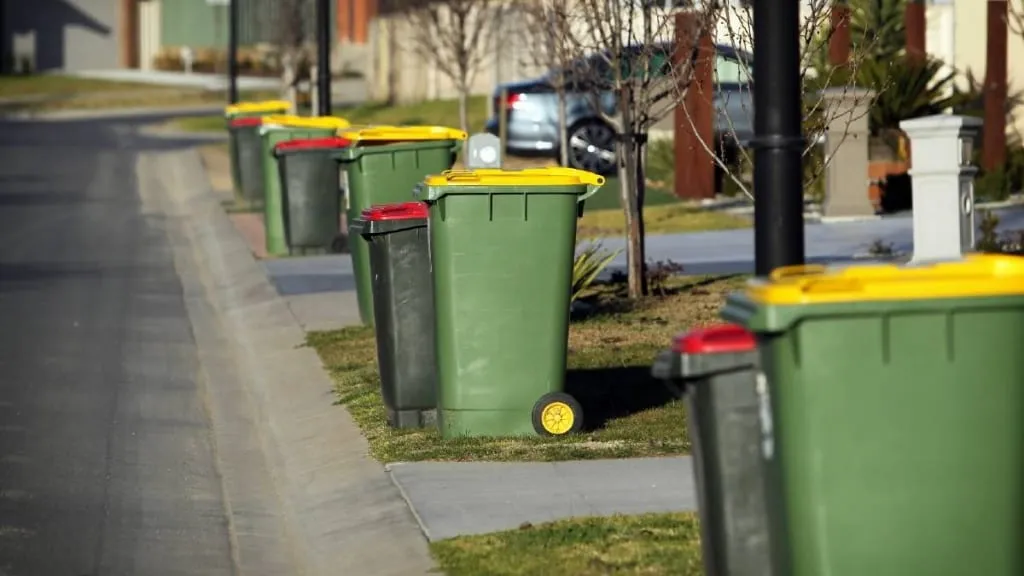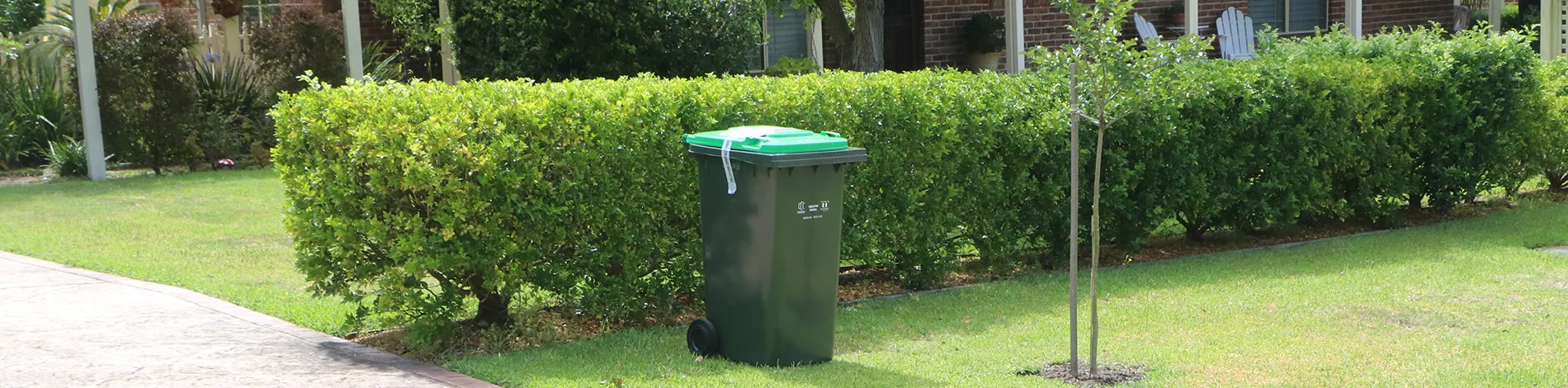
Sydney's green lid bin is for garden waste in every council area, and food scraps too in councils that run a FOGO (Food Organics and Garden Organics) service. NSW has legislated that every council must offer FOGO collection to all households with a red-lid bin service by 1 July 2030, but until then, what your bin accepts and how often it's collected still depends entirely on your council.
Last updated: August 2026.
Looking for wood or timber rules specifically? Wood, timber and logs follow separate rules from garden waste, even within the same green bin. See our dedicated guide: Can I Put Wood or Timber in the Green Recycling Bin?
What is the green bin for?
Every Sydney council runs a green lid bin, but not every green lid bin does the same job: two different services share the same colour.
Some councils run a garden-only green bin. The City of Sydney's is grass clippings, prunings and leaves only, collected fortnightly, with food scraps explicitly excluded. Other councils run a FOGO (Food Organics and Garden Organics) service, where the same-coloured bin takes garden waste and food scraps together, usually collected weekly. Randwick City Council's 240-litre green lid FOGO bin is a working example. It takes garden waste alongside food waste, including "leftovers, bread, vegetable scraps, bones, milk, cheese," in the one bin.
Which service you have depends entirely on your council, and some are mid-transition. Sutherland Shire's green lid bin is garden waste only for now, with food waste explicitly listed as something that cannot go in, ahead of its own planned FOGO rollout. Parramatta has already made the switch: since November 2024, the City of Parramatta has run weekly FOGO collection for houses and for apartment and townhouse complexes of 30 dwellings or fewer, with the service due to expand to all dwelling types.
What goes in the green bin, and what doesn't
Garden waste, accepted almost everywhere
- Grass clippings and lawn cuttings
- Leaves, flowers and weeds
- Small branches, twigs and prunings
Randwick, Sutherland Shire and the City of Sydney all list some version of this core set, though the fine print on branch size differs by council. Sutherland Shire caps sticks and branches at 1 metre long and no thicker than a broomstick, while the City of Sydney's limit is 1 metre long and no thicker than 10cm. Palm fronds need to be cut to a metre length specifically in Sutherland Shire.
Food waste: only where your council runs FOGO
In a FOGO area like Randwick, food scraps, leftovers, bread, bones, milk and cheese all go into the same bin as the garden waste. In a garden-only area, none of that belongs in the green bin. Putting it there counts as contamination, covered below.
Never accepted, whatever your council
- Glass, tins, cans and recyclable plastic containers, which belong in the yellow lid recycling bin
- Building materials, bricks and rubble
- Soil, potting mix and rocks
- Plastic bags, plastic plant pots and garden equipment
- Household rubbish, hazardous or liquid waste, and gas bottles
- Compostable and biodegradable packaging, including compostable nappies, which need an industrial composting facility rather than a kerbside green bin service
If you're on a garden-only service, food scraps belong on this list too.
What happens if you get it wrong
Putting the wrong item in your green bin isn't a minor mix-up in most Sydney councils. It's contamination, and contamination commonly means the whole bin is sent to landfill instead of being turned into compost.
Northern Beaches Council is explicit about this: food scraps in its garden-only green bin "are considered as contamination and can mean the whole load being taken to landfill", because the council doesn't yet run a food organics collection service. The same council warns that compostable packaging causes an identical problem: it needs an industrial composting facility, not a standard green bin run, so "any packaging will mean that the load is wasted and heads to landfill."
This is exactly why the garden-only-versus-FOGO distinction matters more than most people assume. Garden waste is accepted everywhere, so that part's safe to assume. Food waste is not: what's correct in a FOGO council can contaminate a load in a garden-only one. Check which service your council runs before assuming last year's rules, or your neighbour's council's rules, still apply.
How often is the green bin collected, and what size is it?
Collection frequency depends on which service your council runs. The City of Sydney collects its garden-only green bin fortnightly, on the same day as the yellow lid recycling bin. FOGO services tend to run weekly instead. Randwick's FOGO bin is collected every week, and weekly collection is a requirement for the food-waste component under the state mandate, with most existing FOGO councils already collecting weekly.
Bin size is more consistent than collection frequency. Hunter's Hill Council lists its FOGO green bin at a single standard size of 240 litres, while its general waste (red) bin comes in 80, 120 or 240 litre options, matching Randwick's 240-litre FOGO bin. If you need more capacity, most councils let you apply for an additional bin for an ongoing annual fee rather than a one-off charge: Hunter's Hill charges $210 a year, for the 2026-27 financial year, for each additional yellow, blue or green bin. Fees and bin-size options vary by council, so confirm the current charge with yours before applying.
The NSW FOGO mandate: what's changing, and when
FOGO isn't a council-by-council preference forever. It's now a statewide legal requirement, with a firm date attached. NSW has legislated that local councils must provide a Food Organics and Garden Organics (FOGO) waste service to every household that already receives a residual (red lid) waste collection service, by 1 July 2030. A parallel, separately-staged mandate applies to businesses like supermarkets, cafes and hospitality venues, starting from 1 July 2026.
Plenty of councils are already there. As of the EPA's most recently published figures, 70 NSW councils have already implemented, or are actively planning, a FOGO service, and the household mandate extends the requirement to a further 58 councils by 2030, 32 of which already run some form of garden waste service to build on.
The reason it's mandated at all comes down to landfill capacity. Greater Sydney is running out of ways to safely manage general (red bin) waste and is predicted to run out of landfill space by 2030 or earlier. The NSW Government's own analysis found that applying the household mandate statewide could divert almost 950,000 tonnes of FOGO waste a year away from landfill and into compost and other circular-economy products instead.
Practically, that means if your council is still garden-only today, the food-scraps side of your green bin is coming, but the exact date it arrives depends on your specific council, not one fixed rollout date across Sydney.
How to put your bin out for collection
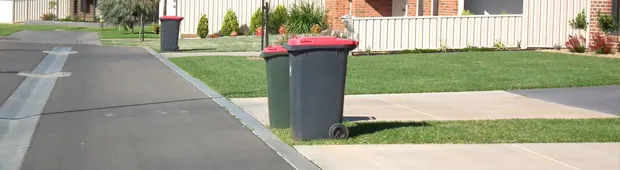
Presentation rules vary by council, but Randwick City Council's guidance is a useful example of what most councils expect. Put your bin on the kerb the night before collection or by 5.30am on collection day, with the handles facing your house. Leave at least 30cm between bins and at least a metre of clearance from obstructions like trees, cars or poles. Don't overfill it, and keep the lid shut, both to stop spills and to keep pests and animals out. The City of Sydney's rule for a missed bin is a useful general pattern too: your bin can be collected any time from 6am to 6pm on your scheduled day, and if it hasn't been by 6pm, you can report a missed collection, which the council commits to picking up within 2 business days.
What to do when the green bin isn't enough
A single bin, emptied once a fortnight or once a week, won't always cover a big prune or a spring clean-up. Most councils offer a few standard options:
- Book a council clean-up. Sutherland Shire residents get a pre-booked council clean-up twice a year for excess garden waste. Randwick residents can call council to book a clean-up when the bin genuinely isn't enough.
- Apply for an additional bin. Most councils, including Sutherland Shire and Hunter's Hill, let residents apply for a second green bin for an ongoing annual fee.
- Compost at home. Grass clippings, leaves and (where accepted) food scraps can go straight into a home compost pit or worm farm instead of the kerbside service. For more on recycling and composting garden waste at home, see our green waste recycling guide.
- No bin at all in a strata building? Your strata manager or body corporate can usually request one from council.
FAQ
What's the difference between a green bin and a FOGO bin? They're often the exact same bin with different rules attached. A green bin can mean garden-waste-only, like the City of Sydney's fortnightly service, or FOGO (Food Organics and Garden Organics), where food scraps go in with the garden waste, like Randwick's weekly 240-litre bin. Check your own council's guidelines to find out which one you've got.
Do I have to put food scraps in my green bin? Only if your council runs a FOGO service. If it doesn't, food scraps in a garden-only green bin count as contamination, not a bonus, and can get the whole load sent to landfill. If you're unsure, check your council's website before changing what you put out.
When will every NSW household have a FOGO bin? NSW has legislated that local councils must provide a FOGO service to every household that already receives a red-lid general waste collection, by 1 July 2030. Many councils, including Randwick and Parramatta, already run one well ahead of that deadline.
What happens if I contaminate my green bin? It depends on the council, but contamination commonly means the whole load is rejected and sent to landfill instead of composted, even if only part of the bin was wrong. Repeated contamination can also affect your ongoing collection service.
Got more green waste than your bin can handle? Paul's Rubbish Removal collects garden waste across Sydney without the wait for the next council clean-up. Get a free quote on garden waste removal