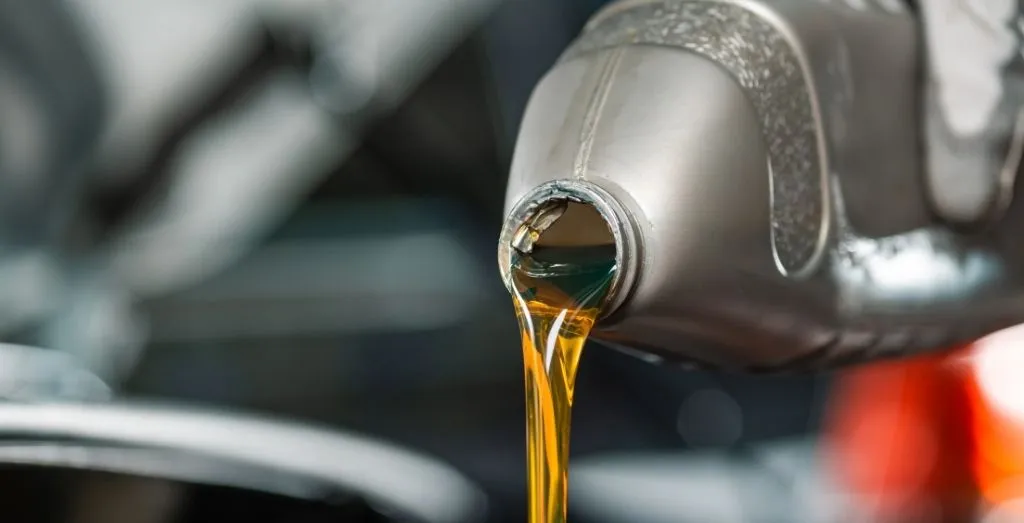


Most old lawn mowers still have petrol in the tank and oil in the sump when they go out for disposal, and that's the part a bin, a skip or a council clean-up pile can't take. In NSW, petrol and engine oil are household hazardous waste: they go to a Community Recycling Centre or a Household Chemical CleanOut event, free, or get professionally drained first. Once that's done, the mower itself is straightforward scrap steel and aluminium.
Last updated: September 2026.
The fuel and oil are the problem, not the mower
A lawn mower is mostly steel, aluminium and plastic, none of which is hazardous on its own. What makes disposal a regulated question is what's still inside it: petrol, and on most mowers, a separate reservoir of engine oil. SafeWork NSW classifies petrol as a flammable liquid, in the same category as kerosene, diesel and methylated spirits. Its hazard guidance is specific about how little it takes to matter: one litre of fully evaporated fuel can produce 5,000 litres of an explosive vapour-air mix, enough to fill a small storeroom or garage. That vapour doesn't need a full tank to form. SafeWork NSW's own guidance on fuel tank handling notes flammable vapour can remain in a container for long periods even after it's been emptied of liquid.
That's why the rule is simple: petrol and engine oil don't go in a bin, in a skip, or out with a council clean-up. NSW EPA is explicit that hazardous waste should never go in kerbside bins, and its own free drop-off list for exactly this kind of hazardous waste names "motor oils, fluids and fuels" specifically. A council clean-up pile is collected the same way, by the same trucks, for the same general household items, so it's no better suited to a fuel-filled mower than the bin is.
Two-stroke vs four-stroke: a different disposal question
Not every mower holds fuel the same way, and it changes what you're actually draining. A four-stroke mower, which covers most modern push and ride-on mowers, has two separate systems to empty: a petrol tank and an engine oil sump. A two-stroke mower, common on older push mowers and on line trimmers and brushcutters if you're clearing the shed at the same time, runs on a single tank of petrol premixed with two-stroke oil. There's no separate oil to drain, but the premix is still petrol at its core, and it needs the same handling: to a Community Recycling Centre or CleanOut event, never tipped out on the ground or down a drain. Electric and battery mowers skip the fuel problem entirely. The battery still needs to be handled separately from general scrap, but there's no petrol or oil involved.
Draining it and dropping it off
- Run the mower dry where that's practical, or siphon what's left into a sealed, clearly labelled container, not an old drink bottle with no lid.
- On a four-stroke mower, drain the engine oil into a sealed container of its own.
- Take the oil to a Community Recycling Centre, which accepts oils free of charge year-round in most council areas. Take the petrol to the next Household Chemical CleanOut event, one of more than 60 held across NSW each year, which explicitly accepts motor oils, fluids and fuels for free. Find your nearest CRC or the next CleanOut date at cleanout.com.au.
- Keep the drained mower somewhere ventilated until collection day rather than a closed cupboard. Residual vapour can linger even once the tank looks empty.
If a mower that sat untouched all winter won't start on the first pull now that mowing season is back, the fuel that's been sitting in the tank since last year is exactly what the steps above are for.
Once it's drained, it's just scrap
With the fuel and oil out, a lawn mower is ordinary scrap: mostly steel and aluminium, with some plastic housing. Scrap metal yards generally want it drained before they'll take it, for the same reason SafeWork NSW gives for not storing undrained fuel tanks: they're a fire and leak risk to move and to store. A mower that won't start, a rusted deck or a seized engine doesn't change the value of the metal once the fuel's out.
If you'd rather not deal with the fuel yourself
Draining and transporting petrol isn't something everyone wants to do at home. Paul's Rubbish collects old mowers (ride-on, push, self-propelled, two-stroke or four-stroke) as part of scrap metal and junk removal in Sydney, and what's collected goes on to council processing facilities that recycle it. Clearing out grass clippings and other garden waste at the same time is a separate job; see garden waste removal for that side of it.