

Most household, garden and renovation waste can go into a NSW skip bin: furniture, timber, bricks, garden clippings, whitegoods and general household rubbish. Asbestos, gas bottles, batteries, paint, chemicals and tyres cannot. It is illegal in NSW to put asbestos in an uncovered skip bin or one not approved to hold it, and every major Sydney skip provider bans gas bottles, batteries, liquids and chemicals outright.
Last updated: August 2026.
NSW takes this seriously enough to run a dedicated year-long campaign. The EPA's Household Problem Waste campaign runs from 13 August 2025 to 30 June 2026, specifically because batteries, gas bottles, paint and chemicals keep turning up in kerbside bins and skips where they shouldn't. The state has put $66 million into household problem-waste infrastructure between 2022 and 2027, and since 2014 has collected more than 27,000 tonnes of it through more than 100 free Community Recycling Centres across the state.
What you can put in a skip bin in NSW
Standard general waste, mixed waste and builders' skip bins accept most of what a household clean-out or renovation produces:
- Household goods: old furniture, appliances, clothes, toys, general clutter
- Garden waste: branches, grass clippings, leaves, shrubs, small tree offcuts
- Builders' and renovation waste: timber, tiles, plasterboard, bricks, metal, general rubble
- Soil and dirt, in most bins, though weight limits apply and some bins are soil-only
- Whitegoods: fridges, washing machines, dryers, but they need to be emptied first
- General household rubbish for a garage, shed or whole-house clean-out
Which of these a specific bin accepts still depends on the waste category you book. A green waste bin won't take rubble, and a clean fill bin won't take general rubbish. Confirm the category matches what you're loading before the bin arrives.
What you can't put in a skip bin in NSW, and why
Asbestos
Asbestos cannot go in a standard skip bin. It is illegal in NSW to dump asbestos waste, put it in your kerbside bin, or put it in an uncovered skip bin or a skip bin not approved to hold it. It's also illegal to reuse or recycle it, for example using it for building or fencing. Asbestos waste has to go to a landfill licensed to accept it, and if you're removing more than 100 kilograms or 10 square metres yourself, you must notify the EPA within 24 hours of delivering the load. Homes and structures built before 1990, fibro sheeting, eaves, garage walls, older roofing, cement driveways, should be treated as possible asbestos until a professional confirms otherwise.
Gas bottles and cylinders
Empty or full, gas bottles and cylinders are excluded from every standard skip bin. LPG cylinders are classified as flammable dangerous goods under NSW's dangerous goods transport regulations, and a punctured or crushed bottle in a truck or compactor is a real explosion risk. Take them to a free Community Recycling Centre instead: undamaged bottles get retested, restamped and put back into the hire industry, and damaged ones are punctured safely and recycled as scrap metal. The same trip is worth it for more than gas bottles: a Community Recycling Centre also takes paint, motor oils, smoke detectors, fire extinguishers, car batteries and fluoro tubes, all free, up to a 20-litre or 20-kilogram container per item.
Batteries
One battery is enough to spark a fire in a skip bin or collection truck, which is why every operator excludes them. Loose household batteries under 5kg, AA, AAA, button, small rechargeables, go to a free B-cycle drop-off point, and 95% of Australians live within a 15-minute drive of one. Larger removable batteries between 5kg and 20kg, like e-scooter or power-tool batteries, go to a Community Recycling Centre or Household Chemical CleanOut event instead. Car batteries go to an automotive shop, battery shop or Community Recycling Centre. Devices with a battery built in, power banks, electric toothbrushes, vapes, carry the same fire risk and are covered by a separate EPA embedded-battery collection trial at select recycling centres.
Electronics and e-waste
Laptops and tablets with a built-in battery are collected as e-waste under the federal National Television and Computer Recycling Scheme, and many councils run their own e-waste collections on top of that. Mobile phones and their batteries, built-in or removable, go through the telecommunications industry's Mobile Muster programme instead. As with any embedded-battery device, don't put these straight in a skip; check your council's e-waste collection or the relevant scheme first.
Paint and household chemicals
Wet paint, chemicals and other liquids aren't allowed in any skip bin. For paint, Paintback runs a free national drop-off scheme: households can bring up to 100 litres per visit, carried in containers no larger than 20 litres each. Interior and exterior architectural paint, primers, sealers, stains and varnishes are accepted; aerosol paints, automotive paint, adhesives and paint thinners aren't, and need a separate chemical drop-off. For household chemicals generally, cleaning products, pesticides and pool chemicals, the EPA runs free Household Chemical CleanOut events at locations across NSW throughout the year; skip operators also point customers to their council's own chemical drop-off events. The consequence of ignoring this is blunt: placing chemicals in a skip can mean fines or the provider refusing to collect it.
Tyres
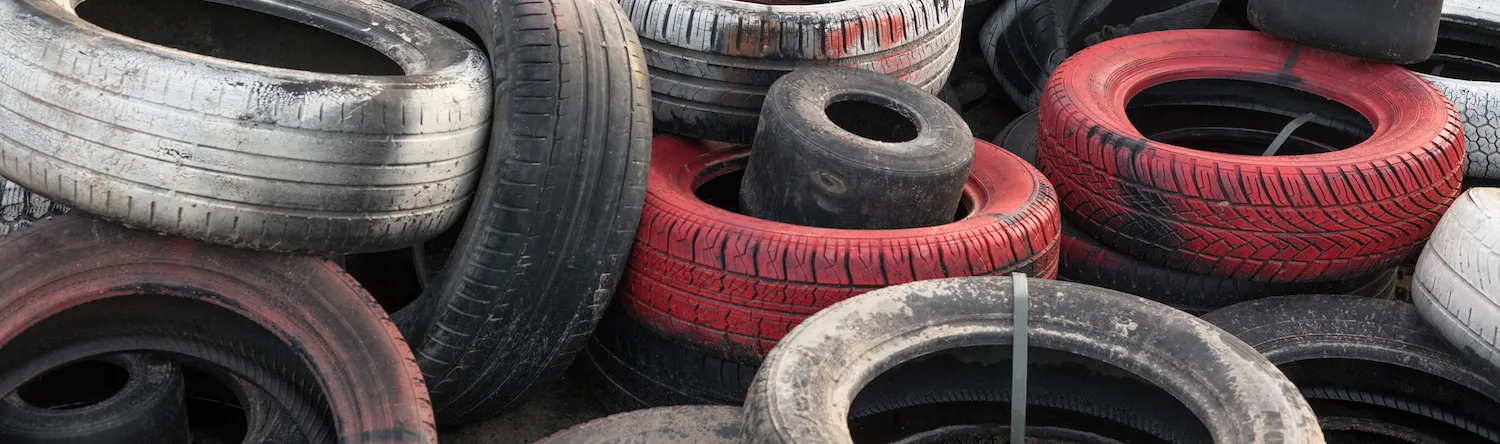
Tyres aren't a blanket legal exclusion the way asbestos or gas bottles are, but they're a practical one. Most recycling-specific skip bins won't take them at all, and general bins usually only take them for an extra charge that has to be arranged on the booking form before the bin arrives. Around 67 million tyres come off Australian cars every year, and illegally dumped or stockpiled tyres are a genuine environmental problem. The straightforward option is a Tyre Stewardship Australia accredited retailer or recycler, of which there are more than 1,600 nationally. Recycled through an accredited retailer, old tyres get turned into new products, roads, paths, playgrounds and flooring among them.
Food waste
Standard skip bins and hooklift bins don't take food waste: it attracts pests, causes odours, and isn't suited to an open-top bin. Use your council's green or food-organics bin instead.
Weight limits and how full you can fill a skip bin
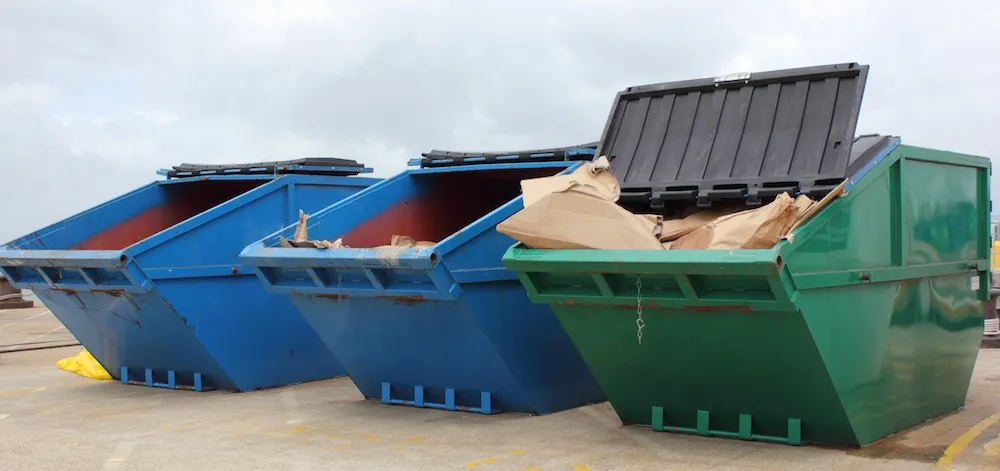
Skip bins are priced by volume, so most Sydney operators cap both how full you can load a bin and how heavy it can be. Waste has to sit level with the rim, nothing sticking out; an overfilled bin can be refused on the day, and if the driver has to return after you've removed the excess, a call-out fee applies. Weight limits typically apply to general waste, green waste and asbestos bins, at around 150kg per cubic metre, so a 2m³ bin holds up to roughly 300kg and a 3m³ bin up to roughly 450kg before extra charges apply. Other categories, household, mixed heavy, mixed waste with soil, light builders, clean waste and mixed rubble, aren't weight-limited in the same way. Every bin is weighed in and out at the waste facility, so there's no guessing whether you've gone over.
These are commercial terms set by individual skip hire operators, not a single fixed NSW law. Figures vary by provider; confirm the exact allowance at booking.
Where to take what a skip bin won't
- Asbestos: illegal in an uncovered or non-approved skip. Goes to a licensed asbestos removalist, then a licensed landfill. Cost varies by facility.
- Gas bottles and cylinders: pressurised, and classed as dangerous goods. Goes to a Community Recycling Centre, free.
- Loose batteries under 5kg: a fire risk in transport and processing. Goes to a B-cycle drop-off point, free.
- Large batteries, 5kg to 20kg: the same fire risk, but too large for B-cycle. Goes to a Community Recycling Centre or a CleanOut event, free.
- Paint: liquid chemical waste, excluded from skips. Goes to a Paintback drop-off point, free for up to 100 litres per visit.
- Household chemicals: hazardous, and excluded from skips. Goes to an EPA Household Chemical CleanOut event, free.
- Tyres: not taken by most recycling-specific bins, and a surcharge applies on the others. Goes to a Tyre Stewardship Australia accredited retailer or recycler. Cost varies.
Skip bin FAQs
Can I put a mattress in a skip bin? Most providers only accept mattresses for an extra charge, arranged before the bin arrives, and mattresses aren't allowed in recycling-specific bins like green waste or clean fill.
What happens if asbestos ends up in my skip bin by mistake? The provider can refuse the load, and the waste facility may test, quarantine or return it, all at extra cost. Deliberately placing asbestos in an uncovered or unapproved skip is illegal in NSW.
Is there a weight limit on a skip bin in NSW? Yes, for general waste, green waste and asbestos bins, typically around 150kg per cubic metre, for example a 3m³ bin up to roughly 450kg, before overweight charges apply.
Can I put an old gas bottle in a skip bin? No. Gas bottles and cylinders are excluded from every standard skip bin because they're pressurised and classed as dangerous goods. Take them to a free Community Recycling Centre instead.
Can I put paint in a skip bin? No, wet paint is excluded from skips. Paintback accepts up to 100 litres of most paint types per visit, for free.
If your job is mostly general household or hard rubbish rather than a full renovation, a skip bin isn't always the simplest option: you're the one sorting what's allowed, watching the fill line and the weight, and arranging a council permit if it sits on the street. Paul's Rubbish collects household and hard rubbish directly from your property instead, and takes mattresses as part of a standard job at no extra charge and no limit on how many, something most skip bins charge for.