Garden waste is not exempt from New South Wales' dumping, littering and burning laws. Depositing more than 50 litres or 50kg of it on public land or an open private place is illegal dumping under the Protection of the Environment Operations Act 1997. Leaving it in a public place where it doesn't belong can separately count as littering. And burning garden waste in the open is generally banned across the Sydney region.
Last updated: August 2026, checked against current NSW EPA guidance.
Illegal dumping of garden waste: the fines
Dumping is the more serious offence. Under section 144AE of the Protection of the Environment Operations Act 1997 (POEO Act), depositing more than 50 litres or 50kg of litter or waste in a public place or an open private place is illegal dumping. Garden waste counts as "litter" under the same Act, alongside items like soil and construction material, so this threshold applies to it directly.
The on-the-spot fine for an individual is $1,000 if it's dumped on public land or open private property, rising to $2,500 if it's dumped in a "sensitive place" as defined by the Act. For a business, those figures are $5,000 and $10,000.
If it goes to court rather than being dealt with on the spot, the maximum penalty for an individual is $25,000 for dumping on ordinary land, or $50,000 in a sensitive place. For larger-scale dumping under sections 143 and 144 of the Act, the on-the-spot fines are higher again: $15,000 for individuals and $30,000 for businesses. Maximum court penalties for that larger-scale tier climb to $500,000 for an individual, plus a further $120,000 for every day the offence continues, and $2,000,000 for a business, plus $240,000 a day. Higher fines apply for a second offence.
If the dumped waste contains asbestos, the maximum penalty doubles for both individuals and businesses. Separately, dumping that is wilful or negligent and causes actual or likely harm to the environment carries its own penalty tier: up to $2,000,000 and/or a 7-year prison sentence for an individual acting wilfully, or $1,000,000 and/or 4 years for a negligent offence; for a corporation it's up to $10,000,000 for a wilful offence and $4,000,000 for a negligent one.
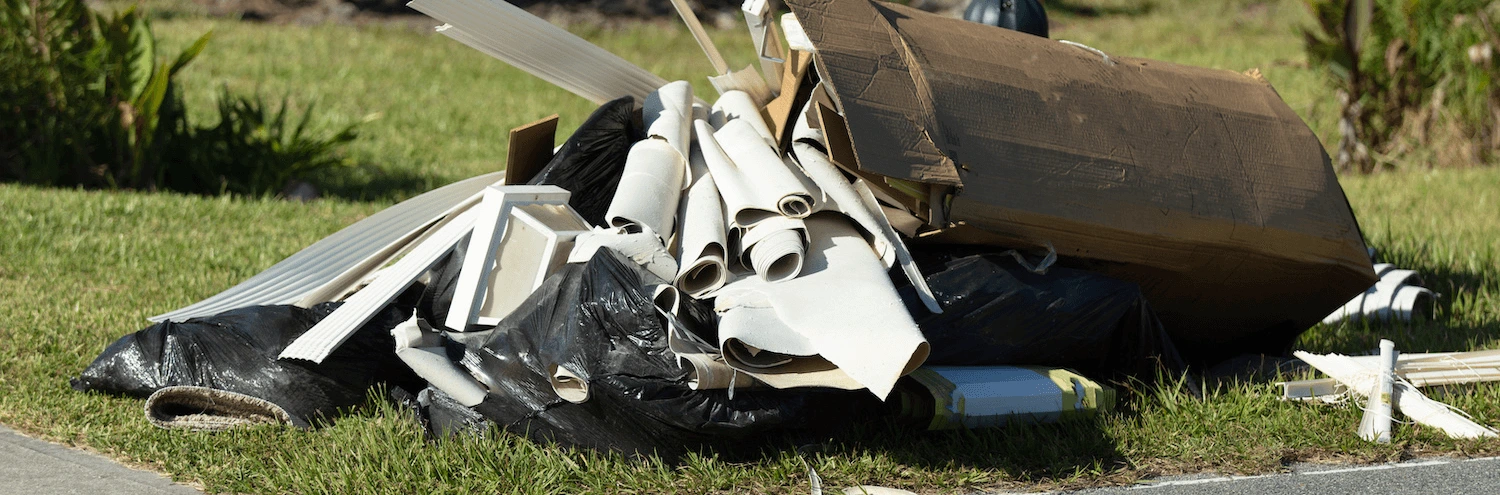
Leaving garden waste on the nature strip, footpath or an open private place
The illegal dumping fines above apply once you're dealing with more than 50 litres or 50kg. Below that threshold, garden waste is still covered under the law, as litter.
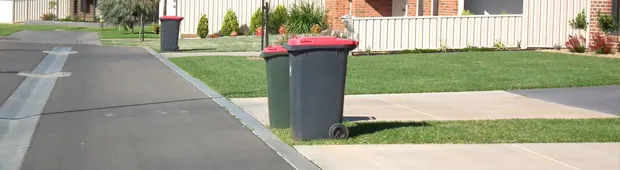
Under section 144A of the POEO Act, "litter" is explicitly defined to include garden remnants and clippings, alongside items like soil, wood and construction material. Littering is defined as depositing litter on land in a public place or an open private place. A footpath or road is a public place under the Act, and a garden or yard around a private residence is an open private place. Garden waste dumped on either can therefore be littering. "Depositing" litter also legally includes simply leaving it in or on a place, not just dropping or throwing it; the Act's own examples of depositing litter include allowing soil, sand or garden waste to blow off a moving vehicle.
For a small item, the on-the-spot littering fine is $160 for an individual, with a maximum court penalty of $5,000. For general litter (a larger amount that doesn't meet the illegal dumping threshold above), an individual's on-the-spot fine is $500 (maximum $5,000) and a business's is $1,000 on the spot (maximum $10,000).
What happens if you're caught: directions and clean-up notices
Being caught doesn't always mean an instant fine. An authorised officer can give the person who deposited the litter a verbal direction to remove it from a public place, and ignoring that direction can itself lead to an on-the-spot fine or a court penalty. Separately, the local council or the EPA can issue a formal clean-up notice requiring the waste to be removed, and ignoring that notice is its own offence too.
Not complying with a direction to remove litter or waste under 50 litres or 50kg carries an on-the-spot fine of $250 for an individual (maximum $5,000) or $1,000 for a corporation (maximum $10,000). Above that 50 litre or 50kg threshold, the on-the-spot fine rises to $500 for an individual (maximum $10,000) or $2,000 for a corporation (maximum $20,000). Ignoring a clean-up notice altogether carries an on-the-spot fine of $2,500 for an individual, with a maximum penalty of $25,000 plus $6,000 for every day the offence continues; for a corporation it's $5,000 on the spot, up to $50,000 plus $6,000 a day.
Can you burn garden waste in your backyard in Sydney?
Generally, no. Burning vegetation or domestic waste in the open, such as a backyard pile or an unauthorised incinerator, is generally prohibited at all times in every council area across the Sydney, Wollongong and Newcastle regions, and in other NSW council areas listed under the Clean Air Regulation. The EPA or your local council can issue an approval in some circumstances.
A backyard fire pit or barbecue is a separate matter: NSW residents don't need approval for one, provided it burns only dry seasoned wood, LPG, natural gas or proprietary barbecue fuel, and doesn't create excessive smoke. That's not a loophole for a pile of prunings: a fire pit or barbecue is a different category to burning off garden waste.
Total Fire Bans and the Bush Fire Danger Period change the rules
The EPA's open burning rules aren't the only law in play. The NSW Rural Fire Service separately requires a Fire Permit for any burning in the open during the Bush Fire Danger Period, which runs from 1 October to 31 March by default, though the exact dates can vary locally. In a Fire and Rescue NSW district, a permit is required all year round, not just during that period. Cooking fires are exempt from the permit requirement, but only if the fire is in a permanently constructed fireplace, on ground cleared of combustible material for at least two metres around it, and completely extinguished before you leave.
On a day the RFS Commissioner declares a Total Fire Ban, none of that matters: no fire can be lit, maintained or used in the open at all, which covers a backyard fire pit even though it's normally allowed without approval. A barbecue or wood-fired pizza oven that uses solid fuel such as wood, charcoal or heat beads also cannot be used outside on a Total Fire Ban day. An electric or gas barbecue must still be under a responsible adult's direct, continuous supervision, with no combustible material within two metres; a gas barbecue also needs a continuous water supply on hand, and must be within 20 metres of a home or in a picnic area approved by the council, National Parks or State Forest. Any fire permit you hold is suspended for the day.
Lighting a fire on a Total Fire Ban day carries an on-the-spot fine of $2,200, rising to a maximum of $5,500 and/or 12 months' gaol if it goes to court, and up to $132,000 and/or 14 years' gaol if the fire escapes and damages or destroys life, property or the environment.
The NSW household FOGO mandate
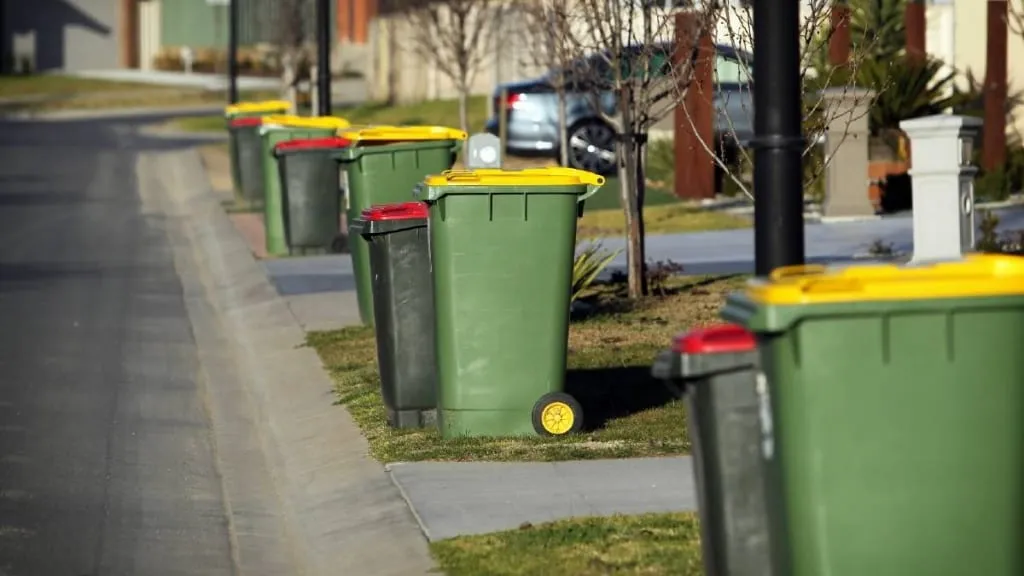
Garden organics collection is becoming a legal requirement for councils, not just an optional service. NSW Parliament has passed legislation requiring local councils to provide every household that already receives a red-lid residual waste collection with a Food Organics and Garden Organics (FOGO) service by 1 July 2030. Councils and businesses that don't comply face maximum penalties of up to $500,000 plus a further $50,000 for every day the offence continues, on top of on-the-spot fines of up to $5,000.
FAQ
What counts as illegal dumping in NSW? Depositing more than 50 litres or 50kg of litter or waste, including garden waste, in a public place or an open private place.
Is garden waste considered litter? Yes. Section 144A of the POEO Act names garden remnants and clippings explicitly as litter, alongside items like soil, wood and construction material.
Can I burn garden waste in my backyard in Sydney? Generally, no. Open burning of vegetation is banned at all times across the Sydney region unless your council or the EPA has approved it. A backyard fire pit or barbecue is a separate, permitted category, unless a Total Fire Ban is in force.
Does a Total Fire Ban override my normal burning approval? Yes. On a Total Fire Ban day, no fire can be lit in the open at all, including a backyard fire pit or wood-fired barbecue that's normally allowed without approval, and any fire permit you hold is suspended for the day.
How do I report illegal dumping in NSW? The EPA's RIDonline system (ridonline.epa.nsw.gov.au) is the EPA's own online reporting service for illegal dumping across NSW.
The compliant option
Paul's Rubbish Removal collects garden waste across Sydney, so a trailer of prunings doesn't turn into a dumping fine, a littering fine or a burn-ban headache. See garden waste removal or call 0407 125 125 for a free quote.