Is It Illegal to Put Rubbish in Someone Else's Bin?
Short answer: yes, technically. The Protection of the Environment Operations Act 1997 is the law that governs this. Putting rubbish in a neighbour's bin without asking meets that Act's definition of littering: it's litter, and leaving it in a bin that isn't yours is depositing it. The offence carries a real fine. Here's what the law actually says, and what to do if your own bin keeps filling up before collection day.
Last updated: August 2026
What NSW law actually says about it
The law that governs this is the Protection of the Environment Operations Act 1997, NSW's primary littering legislation.
Under section 144A of the Act, "litter" is defined to include any solid or liquid domestic or commercial refuse, debris or rubbish. That definition applies whether or not the material has any value. The Act also defines "depositing" litter to include leaving litter in or on a place.
Putting a bag of your own rubbish into a bin that isn't yours, without asking, fits that definition on an ordinary reading: you're leaving litter in or on a place, even if you never throw or drop anything.
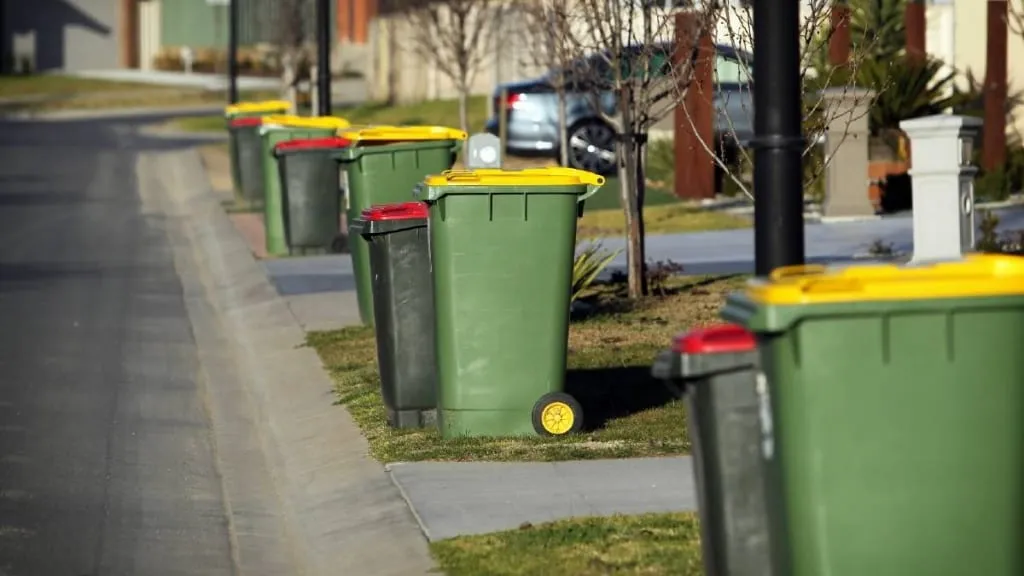
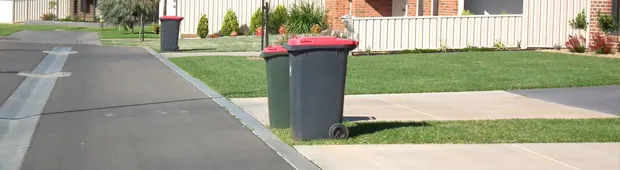
The offence applies to litter deposited in a "public place" or an "open private place". The EPA's own examples of an open private place include gardens or yards around private residences. Its examples of a public place include roads and footpaths. A neighbour's bin sitting in their own yard falls squarely inside the open private place definition. A bin already out on the nature strip waiting for collection is a step further from that yard, but councils themselves treat that strip as public land, not private property: Bayside Council's rules on placing items there, for example, describe it as "public land such as a roadway or verge". On an ordinary reading that puts a kerbside bin in the public place category instead, so either way, a neighbour's bin falls inside one of the Act's two location categories.
So no, it's not a grey area of etiquette, it's littering under NSW law. Whether anyone ever gets fined for it is a separate question, covered below.
What the fine actually looks like
For littering a small item, the on-the-spot fine is $160 for an individual. For other litter that doesn't fall into the small-item category, the on-the-spot fine is $500 for an individual, with a maximum penalty of $5,000.
There's a separate, much higher tier, but it doesn't apply to an ordinary bin-stuffing case: depositing more than 50 litres or 50 kilograms of litter carries a $1,000 fine for an individual. A stray garbage bag in next door's wheelie bin is nowhere near that threshold; it's the lower littering tier above, not this one.
An authorised officer can also give a verbal direction to remove litter from a public place, and failing to comply with that direction carries its own on-the-spot fine or court penalty. That is a second, separate enforcement path, not a precondition: the fines above apply to the act of littering itself. For a one-off bag left in a neighbour's bin, the realistic outcome is far more often an awkward conversation than a fine, though the fine tier above is real if someone does act on it.
Where a repeat problem actually gets reported
There are two separate channels, and which one applies depends on scale. The state government's RIDonline is built for illegal dumping: you upload a photo of the dumped waste, add the location using your device's GPS or the site's map, describe what was dumped, and submit, and the relevant council gets an automatic email alert. The EPA defines illegal dumping as disposing of more than small amounts of waste without the right approvals, which lines up with the 50 litre/50 kilogram-plus tier covered above, not an ordinary bag in a bin. For that smaller, far more common case, RIDonline isn't the right tool: it's a matter for your local council's waste team, the same body the EPA names as the regulatory authority that can issue a clean-up notice for litter in a public place.
There's a business angle here too. The fine table above applies equally to a business: for littering a small item, the on-the-spot notice is $160 whether the offender is an individual or a corporation, but a corporation's maximum court penalty is $10,000, double the $5,000 an individual faces. For the higher 50 litre/50 kilogram dumping tier, that gap widens further: an individual's maximum penalty is $25,000, a corporation's is $50,000. So a tradie or contractor dumping offcuts in a client's neighbour's bin isn't just risking their own fine; the business behind them is exposed to a considerably larger one.
A wheelie bin isn't a skip bin
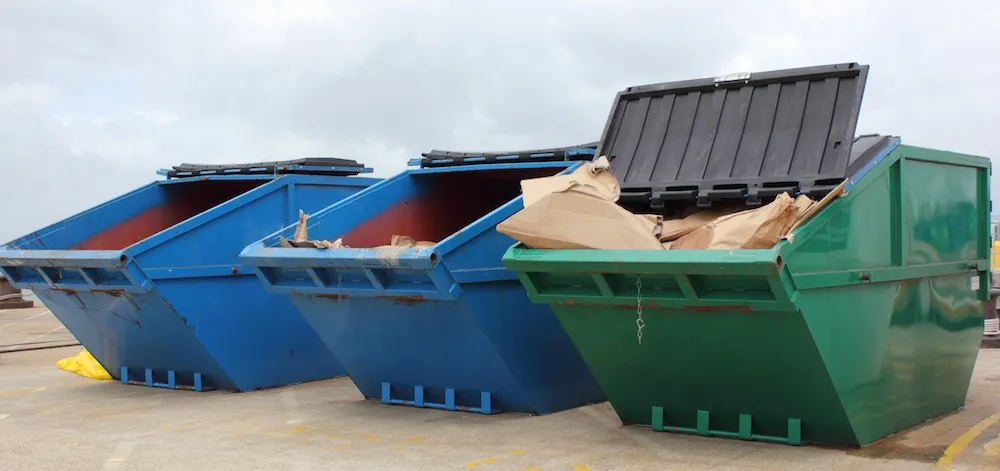
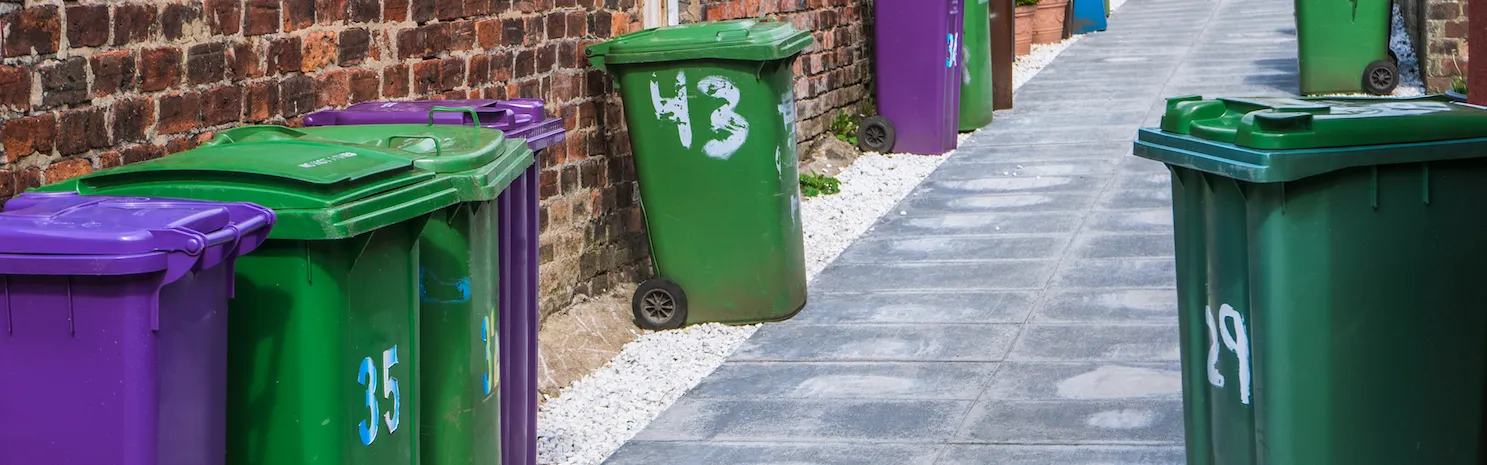
Everything above is about a normal household bin outside a house. If the bin in question is a hired skip on a building or renovation site, the situation is different: that's a builder's waste container, not a council-collection bin, and it comes with its own set of problems (and its own article: Is It Illegal to Throw Junk into Someone Else's Skip Bin). This page sticks to the household case: your bin, your neighbour's bin, or the one waiting on the nature strip.
How to stop it happening to your bin
- Keep it out of sight until collection day. If your bin only needs to be on the street on a set day, there's no reason to leave it exposed the rest of the week. Wheel it out the morning of collection, not the night before.
- Use the lid properly. It sounds basic, but a bin left open or overflowing is an open invitation. A closed lid stops the casual, low-effort cases.
- Add a lock if it keeps happening. Bin locks are cheap and stop anyone without a key from lifting the lid at all.
- Leave a clear, direct note. Some people genuinely don't realise it bothers you. A short, polite note on the bin fixes that more often than you'd expect.
- A visible camera changes behaviour. Even a basic doorbell or driveway camera pointed at the bin area puts people off, and gives you something to act on if it doesn't.
- If it's persistent, report it to your council. Repeated dumping in your bin is exactly the kind of complaint local councils act on, and the fines above are what backs that complaint.
Bin rejected, damaged or missing? What actually happens
There's a second, more common consequence worth knowing about: contamination. If enough of what lands in your bin is the wrong material, or enough of it that the lid won't close, the council's truck can leave it uncollected rather than fine anyone. Inner West Council rejects a bin if it weighs more than 70 kilograms or its lid can't close from overflowing, since spilled rubbish left on the street can't be collected either way. Its fix is straightforward: remove the wrong items and put the bin out again next collection, or if the contaminants aren't obvious, report it with a photo of the contents so a resource recovery officer can help.
A bin that's damaged, missing or stolen, rather than just contaminated, is a separate process, and in each Sydney council example below, it doesn't cost anything. Inner West replaces damaged, lost or stolen bins free of charge, up to three per property. City of Sydney repairs and replaces most bins free of charge too, with the request taking about a week. Fees now apply there once a household has used its free annual limit on missing red-lid rubbish bin replacements, from 1 July. North Sydney runs a similar free repair-and-replace service through its Waste Hotline, with a slightly longer one-to-two week turnaround. None of these processes require proving who caused the damage: if your bin is unusable, replacing it is the direct fix, whatever put it out of action.
If your own bin isn't enough
The reason people end up eyeing a neighbour's bin is almost always the same: too much rubbish, not enough bin. If that's the actual problem, a bin isn't the fix, a proper collection is. Paul's Rubbish Removal has been doing this in Sydney for over 15 years, backed by a 100% satisfaction guarantee, and there's no public pricing to work around: every job gets a free, volume-based quote.
Book before 10am and we can often collect the same day, useful when a bin's overflowing and collection day is still a week away. We take household rubbish, hard rubbish, and garden waste, so the extra bags never need to go anywhere near next door's bin.
Household rubbish removal · Hard rubbish removal · Garden waste removal
Call 0407 125 125 for a free quote.
FAQs
Can I get fined for putting rubbish in my neighbour's bin? Yes, in principle. It meets the definition of littering, which carries an on-the-spot fine of $160 or $500 for an individual depending on what's being littered. In practice, enforcement for a single bag is rare and usually starts with a council warning rather than a fine.
Is it different for a hired skip bin on a building site? Yes, that's a separate situation with its own cost and access issues. See Is It Illegal to Throw Junk into Someone Else's Skip Bin.
What should I do if someone keeps filling my bin? A visible camera and a clear note stop most casual cases. If it keeps happening, it's a legitimate council complaint, per the fines above.
Is it OK if the bin is basically empty and collection is tomorrow? The legal position doesn't change based on timing. It's still someone else's bin without their permission, and none of the definitions above turn on how full the bin already is.